Yemen
World Rank: #38
527,968 km²




Yemen: Arabia’s Mountainous Southern Gateway
Yemen ranks as the thirty-eighth largest country in the world with a territory of 527,968 square kilometers (203,850 square miles). Occupying the southwestern corner of the Arabian Peninsula, Yemen stands as a geographic bridge between the Middle East, East Africa, and Indian Ocean trade routes, a position that has shaped its history for millennia.
What makes Yemen geographically remarkable is its dramatic topographical diversity. While many associate the Arabian Peninsula with endless deserts, Yemen defies this stereotype with towering mountains exceeding 3,600 meters (12,000 feet), fertile highlands, coastal plains, and island territories. This varied landscape has created one of the Middle East’s most ecologically diverse countries, with distinct cultural regions shaped by these geographic differences.
Located between approximately 12° and 19° North latitude, Yemen experiences minimal distortion on standard Mercator projection maps. The country’s distinctive shape, resembling a rough triangle with its apex pointing toward the strategic Bab el-Mandeb Strait, is accurately represented on most world maps, though its internal geographic complexity is often overlooked.
Let’s explore how Yemen’s true size compares to other major countries and regions, and what makes this Arabian Peninsula nation geographically unique.
Watch Yemen expand its size as we move it away from the equator. We compare it to the USA, Europe, Africa, Greenland, Brazil, Australia, Russia, India, China, etc. You can use this country size comparison interactive map here.
Yemen’s True Size in Global Perspective
To better understand Yemen’s dimensions, direct comparisons with other countries and regions provide valuable context:

Yemen vs. Western Europe: Yemen is comparable in size to France
| Comparison | Area (km²) | Size Relative to Yemen |
|---|---|---|
| Yemen | 527,968 | 1.0 |
| France | 551,695 | 1.04 times Yemen’s size |
| Spain | 505,990 | 0.96 times Yemen’s size |
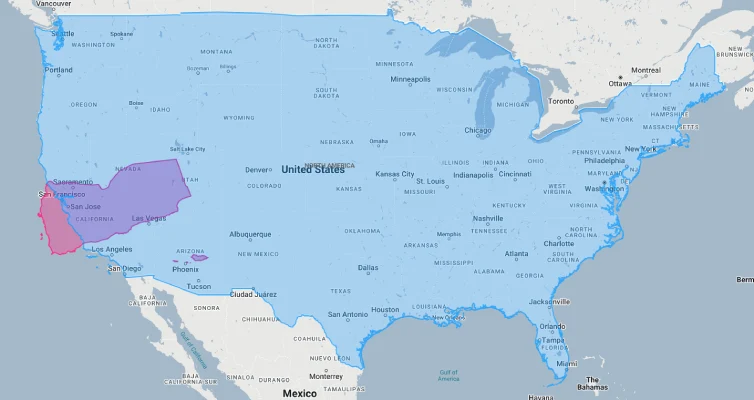
| California (US state) | 423,970 | 0.80 times Yemen’s size |
| United Kingdom | 242,495 | 0.46 times Yemen’s size |
5 Surprising Yemen Size Comparisons
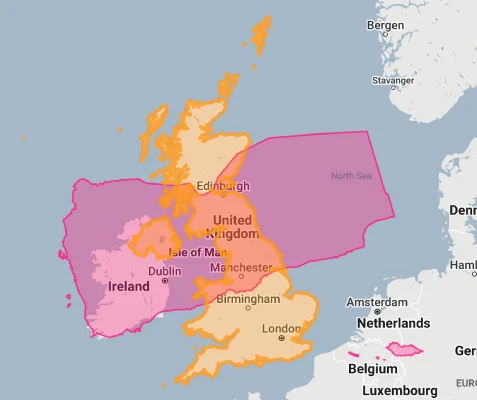
- Yemen vs. United Kingdom: Yemen is approximately 2.2 times larger than the United Kingdom (242,495 km²), despite receiving far less attention on the world stage.
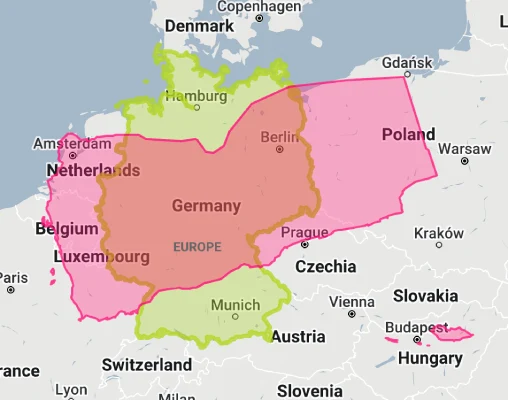
- Yemen vs. Germany: Yemen is approximately 1.5 times larger than Germany (357,022 km²), Europe’s most populous country.
- Yemen vs. California: Yemen is about 25% larger than California (423,970 km²), the third-largest U.S. state.
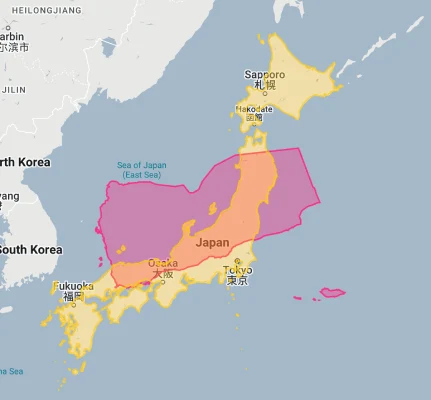
- Yemen vs. Japan: Yemen is 40% larger than Japan (377,975 km²), despite Japan having a population over five times larger.
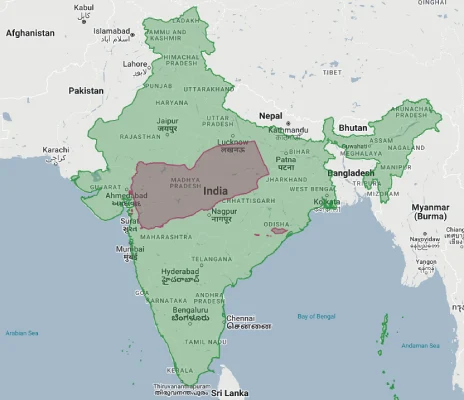
- Yemen vs. India:
Yemen’s Geographic Diversity: Mountains to Desert
Yemen features a remarkable variety of landscapes that have shaped its regional cultures:
- Mountain Highlands: The western highlands form Yemen’s most distinctive feature, with peaks exceeding 3,600 meters (12,000 feet) at Jabal an Nabi Shu’ayb, the highest point on the Arabian Peninsula
- Coastal Plain (Tihamah): A narrow, hot, and humid coastal strip runs along Yemen’s Red Sea coast, ranging from 20-65 kilometers (12-40 miles) wide
- Eastern Plateau: The central highlands gradually slope eastward into a vast plateau that transitions into the Empty Quarter desert
- Rub’ al Khali (Empty Quarter): The world’s largest sand desert extends into eastern Yemen, creating one of Earth’s most inhospitable environments
- Islands: Yemen includes over 200 islands, the largest being Socotra, a UNESCO World Heritage site famous for its unique biodiversity
The Western Highlands: Yemen’s Historical Core
The western highlands form the geographic and cultural heart of Yemen:
- This mountainous region rises steeply from the coastal plain, creating a dramatic escarpment visible from the Red Sea
- The highlands receive significantly more rainfall than other parts of Yemen, making them the country’s agricultural center
- This region features elaborate terraced agriculture, some dating back over 2,000 years, creating striking green landscapes during the rainy season
- The highlands contain Yemen’s capital, Sana’a, one of the world’s oldest continuously inhabited cities at an elevation of 2,300 meters (7,500 feet)
- The region’s temperate climate and agricultural productivity have made it Yemen’s most densely populated area throughout history
Population Distribution: Highland Concentration
Yemen’s population distribution reflects its varied topography and water availability:
- With approximately 30 million people, Yemen has a moderate average population density of about 57 people per square kilometer
- This density varies dramatically, with the western highlands having densities over 300 people per square kilometer, while vast eastern desert regions have fewer than 5 people per square kilometer
- About 38% of Yemenis live in urban areas, though rapid urbanization is ongoing
- The greater Sana’a metropolitan area houses over 4 million people – about 13% of the country’s population
- Other major population centers include the port cities of Aden, Hodeidah, and Al Mukalla, along with highland cities like Taiz and Ibb
Yemen’s Governorates: Diverse Administrative Units
Yemen is divided into 21 governorates, several of which are comparable in size to entire countries:
| Yemen Governorate | Area (km²) | Comparable Country |
|---|---|---|
| Hadramaut | 167,749 | Tunisia (163,610 km²) |
| Al Mahrah | 67,340 | Ireland (70,273 km²) |
| Shabwah | 47,728 | Slovakia (49,035 km²) |
| Al Jawf | 39,500 | Switzerland (41,285 km²) |
| Ma’rib | 20,023 | Israel (20,770 km²) |
Geography and Climate: Desert to Mountain
Yemen’s varied topography creates distinct climatic zones:
- The coastal plain (Tihamah) experiences extremely hot and humid conditions, with summer temperatures regularly exceeding 40°C (104°F) and high humidity from the Red Sea
- The western highlands have a temperate climate with distinct seasons and moderate temperatures, rarely exceeding 25°C (77°F) or falling below 0°C (32°F) at higher elevations
- The eastern plateau and desert regions experience hot days and cool nights typical of arid environments, with minimal rainfall
- Yemen has two primary rainy seasons in most regions: March-May and July-September, with annual precipitation ranging from under 50 mm (2 inches) in desert areas to over 500 mm (20 inches) in the highlands
- Socotra Island has a unique climate influenced by the Indian Ocean monsoons, with distinct wet and dry seasons
Maritime Geography: Strategic Waterways
Yemen’s position gives it control over some of the world’s most strategic waterways:
- Yemen has approximately 1,906 kilometers (1,184 miles) of coastline along the Red Sea, Gulf of Aden, and Arabian Sea
- The country overlooks the Bab el-Mandeb Strait, one of the world’s most critical maritime chokepoints, through which approximately 9% of global seaborne petroleum passes
- Yemen’s territorial waters include important shipping lanes connecting Europe and the Mediterranean to the Indian Ocean and beyond
- The Gulf of Aden, bordering southern Yemen, serves as a vital approach to the Suez Canal
- Yemen’s maritime geography has made it strategically significant throughout history, from ancient incense trade routes to modern global shipping
Natural Resources: Limited But Significant
Yemen’s territory contains various natural resources, though many remain underdeveloped:
- Oil and natural gas deposits exist in several regions, particularly in the eastern governorates, though reserves are modest compared to neighboring Gulf states
- Mineral resources include gold, copper, nickel, lead, zinc, and various industrial minerals, many of which remain largely unexploited
- Agricultural resources are concentrated in the western highlands, where coffee, qat, fruits, and cereals are grown, often on ancient terraced fields
- Marine resources along Yemen’s extensive coastline represent significant economic potential, though fishing infrastructure remains limited
- The country’s unique biodiversity, particularly on Socotra Island, represents a potential resource for ecotourism and scientific research
Geographic Hazards: Water Scarcity and More
Yemen’s geographic position exposes it to various natural hazards:
- Water Scarcity: Yemen is one of the world’s most water-stressed countries, with renewable water resources of just 80 cubic meters per person annually (compared to a global average of 6,000)
- Flash Floods: The arid landscape and intense seasonal rains create conditions for destructive flash floods, particularly in valley regions
- Drought: Extended periods of drought affect agricultural productivity and water availability in many regions
- Tropical Cyclones: Yemen’s southern coast occasionally experiences tropical cyclones from the Arabian Sea, such as Cyclone Chapala in 2015
- Seismic Activity: Yemen lies near the boundary between the Arabian and African tectonic plates, making parts of the country vulnerable to earthquakes
Explore More Size Comparisons
Curious about how other major countries and continents compare in true size? Check out these related articles:
- The True Size of Kenya: East Africa’s Geographic Hub of Diversity
- The True Size of Thailand: Southeast Asia’s Distinctive Heartland
- The True Size of Saudi Arabia: The Desert Kingdom Larger Than Western Europe
- Complete List of Countries by True Size
Sources & Further Reading
- Central Statistical Organization of Yemen. (2022). Statistical Yearbook.
- Food and Agriculture Organization (FAO). (2023). Yemen Geographic Profile.
- CIA World Factbook. (2023). Yemen.