Ukraine
World Rank: #35
603,500 km²


Next Smaller Country
(Rank #36)
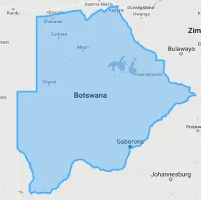
Botswana
581,730 km²

Ukraine: Europe’s Second-Largest Nation Revealed
Ukraine ranks as the thirty-fifth largest country in the world with a territory of 603,500 square kilometers (233,013 square miles). Stretching from the Carpathian Mountains in the west to the Don River basin in the east, Ukraine stands as the second-largest country entirely within Europe, after European Russia.
What makes Ukraine geographically remarkable is its vast, fertile plains that have earned it the nickname “Europe’s breadbasket.” This agricultural powerhouse contains approximately one-quarter of the world’s highly fertile black soil (chernozem), enabling it to be one of the world’s leading grain exporters. Ukraine’s territory is roughly the size of Texas or France, making it significantly larger than most European nations.
Located between approximately 44° and 52° North latitude, Ukraine experiences moderate distortion on standard Mercator projection maps. While its proportions are reasonably well preserved on world maps, the true scale of Ukraine relative to Western European countries is often underappreciated.
Let’s explore how Ukraine’s true size compares to other major countries and regions, and what makes this Eastern European nation geographically unique.
Watch Ukraine shrink to its actual size as we move it toward the equator. We compare it to the USA, Europe, Africa, Greenland, Brazil, Australia, Russia, India, China, etc. You can use this country size comparison interactive map here.
Ukraine’s True Size in Global Perspective
To better understand Ukraine’s dimensions, direct comparisons with other countries and regions provide valuable context:

Ukraine vs. Western Europe: Ukraine is comparable in size to Germany and Poland combined
| Comparison | Area (km²) | Size Relative to Ukraine |
|---|---|---|
| Ukraine | 603,500 | 1.0 |
| France | 551,695 | 0.91 times Ukraine’s size |
| Spain | 505,990 | 0.84 times Ukraine’s size |
| Germany and Poland combined | ~649,642 | 1.08 times larger |
| California (US state) | 423,970 | 0.70 times Ukraine’s size |
5 Surprising Ukraine Size Comparisons
- Ukraine vs. United Kingdom: Ukraine is approximately 2.5 times larger than the United Kingdom (242,495 km²), despite having a smaller population.

- Ukraine vs. Texas: Ukraine is slightly smaller than Texas (695,662 km²), with about 87% of the U.S. state’s area.

- Ukraine vs. France: Ukraine is about 10% larger than metropolitan France (551,695 km²), making it significantly larger than most Western European nations.

- Ukraine vs. California: Ukraine is approximately 1.4 times larger than California (423,970 km²), the third-largest U.S. state.

- Ukraine vs. Russia: Ukraine is very small compared to Russia, the biggest country on Earth.

Ukraine’s Geographic Diversity: From Mountains to Steppes
Ukraine features a surprising variety of landscapes:
- Mountain Ranges: The Carpathian Mountains in western Ukraine reach heights of up to 2,061 meters (6,762 feet) at Mount Hoverla, the country’s highest peak
- Fertile Plains: The vast central and eastern regions feature the famous Ukrainian steppe and forest-steppe zones, home to some of the world’s most productive agricultural land
- Coastal Areas: Ukraine has 2,782 kilometers (1,729 miles) of coastline along the Black Sea and the Sea of Azov
- River Systems: Major rivers include the Dnieper, Dniester, Southern Bug, and portions of the Donets and Danube, which have shaped both geography and historical development
- Diverse Ecosystems: From alpine regions in the Carpathians to deciduous forests, steppe grasslands, and coastal wetlands, Ukraine contains remarkably diverse ecosystems
The Dnieper River Basin: Ukraine’s Heartland
The Dnieper (Dnipro) River valley forms the geographic core of Ukraine:
- The Dnieper is Europe’s fourth-longest river, flowing for 2,201 kilometers (1,368 miles), with 981 kilometers (610 miles) within Ukraine
- The river’s basin in Ukraine covers approximately 291,400 square kilometers, about 48% of Ukraine’s territory
- A series of reservoirs and hydroelectric stations along the Dnieper provide crucial energy and water resources
- Many of Ukraine’s major cities, including Kyiv (the capital), Dnipro, and Zaporizhzhia, are located along the Dnieper River
- The river has historically served as a major transportation artery and has played a central role in the development of Ukrainian civilization
Population Distribution: East-West Balance
Ukraine’s population distribution shows interesting patterns:
- With approximately 41 million people, Ukraine has an average population density of about 68 people per square kilometer
- This density varies considerably, with the eastern industrial regions and major urban areas having densities over 160 people per square kilometer, while some rural areas may have fewer than 40 people per square kilometer
- About 69% of Ukrainians live in urban areas, with major population centers distributed relatively evenly across the country
- The Kyiv metropolitan area houses over 3.6 million people – about 9% of the country’s population
- Other major urban concentrations include Kharkiv, Odesa, Dnipro, and Donetsk, creating a balanced distribution of population across the country
Ukraine’s Oblasts: Comparable to European Countries
Ukraine is divided into 24 oblasts (provinces), plus the Autonomous Republic of Crimea and two cities with special status (Kyiv and Sevastopol):
| Ukrainian Oblast | Area (km²) | Comparable Country |
|---|---|---|
| Odesa Oblast | 33,310 | Belgium (30,528 km²) |
| Dnipropetrovsk Oblast | 31,914 | Moldova (33,846 km²) |
| Chernihiv Oblast | 31,865 | Albania (28,748 km²) |
| Kharkiv Oblast | 31,415 | Switzerland (41,285 km²) |
| Zhytomyr Oblast | 29,832 | Armenia (29,743 km²) |
Geography and Climate: Continental Influences
Ukraine’s geography creates distinct climatic patterns:
- Ukraine has a predominantly temperate continental climate, with cold winters and warm summers
- The southern Crimean coast features a unique Mediterranean-type climate, the only such area in Ukraine
- Average temperatures range from -8°C to -12°C (17°F to 10°F) in winter and from 18°C to 25°C (64°F to 77°F) in summer, with significant regional variations
- Precipitation generally decreases from northwest to southeast, with western regions receiving up to 1,200 mm (47 inches) annually, while southeastern areas may receive less than 400 mm (16 inches)
- These climate patterns, combined with Ukraine’s rich soils, create ideal conditions for growing wheat, corn, sunflowers, and other key crops
International Borders: A European Crossroads
Ukraine occupies a strategic position at the crossroads of Europe and Eurasia:
- Ukraine shares borders with seven countries: Russia (1,944 km), Moldova (1,202 km), Belarus (1,084 km), Poland (535 km), Hungary (128 km), Slovakia (97 km), and Romania (601 km)
- This position has historically made Ukraine a cultural and commercial crossroads between Central Europe, Eastern Europe, and the Black Sea region
- The country serves as a major transit corridor for energy resources, particularly natural gas, flowing from Russia to European markets
- Ukraine’s western border forms part of the European Union’s eastern frontier, making it an important geopolitical boundary
- Geographic challenges along these borders include managing transboundary rivers, addressing environmental concerns, and facilitating cross-border commerce
Natural Resources: Beyond the Black Earth
Ukraine’s varied territory contains diverse natural resources:
- Ukraine possesses approximately 30% of the world’s richest black soil (chernozem), making agriculture its most valuable natural resource
- The country has significant mineral deposits, including iron ore (4th largest reserves globally), manganese (2nd largest), titanium, uranium, and various non-metallic minerals
- Coal reserves are substantial, particularly in the eastern Donbas region, which contains approximately 95% of Ukraine’s coal
- Modest oil and natural gas reserves exist, particularly in the Dnieper-Donetsk basin and the Black Sea shelf
- The vast agricultural zones produce wheat, corn, barley, sunflower seeds, and sugar beets, making Ukraine one of the world’s leading agricultural exporters
Geographic Hazards: From Floods to Drought
Ukraine’s geographic position exposes it to various natural hazards:
- Flooding: Spring floods along major rivers, particularly in western Ukraine’s Carpathian region, can cause significant damage
- Drought: The southern and eastern steppe regions periodically experience drought conditions that impact agriculture
- Soil Erosion: Wind and water erosion pose threats to Ukraine’s valuable agricultural lands, particularly in areas with intensive farming
- Storms: Severe storms, including blizzards in winter and thunderstorms in summer, can affect various regions
- Environmental Challenges: While not natural hazards, Ukraine faces environmental challenges related to industrial pollution, particularly in eastern industrial zones, and continues to manage the legacy of the 1986 Chornobyl nuclear disaster
Explore More Size Comparisons
Curious about how other major countries and continents compare in true size? Check out these related articles:
- The True Size of Myanmar: Southeast Asia’s Hidden Geographic Giant
- The True Size of Russia
- The Real Size of Germany
- The True Size of USA
- Complete List of Countries by True Size
Sources & Further Reading
- State Statistics Service of Ukraine. (2023). Geographic and Demographic Statistics.
- Institute of Geography, National Academy of Sciences of Ukraine. (2022). Geographic Atlas of Ukraine.
- CIA World Factbook. (2023). Ukraine.