Finland
World Rank: #64
338,424 km²



Next Smaller Country
(Rank #65)
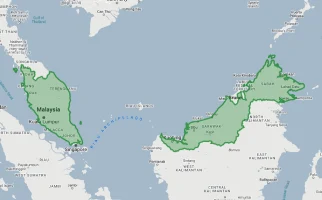
Malaysia
330,803 km²

Finland: Northern European Giant
Finland ranks as the 64th largest country in the world with a territory of 338,424 square kilometers (130,666 square miles). Located in Northern Europe, Finland shares land borders with Sweden, Norway, and Russia, with the Gulf of Finland separating it from Estonia to the south. This Nordic nation is the eighth-largest country in Europe by area—larger than Italy, the United Kingdom, and Poland.
What makes Finland geographically remarkable is its high northern latitude combined with its substantial size. Finland’s territory extends from approximately 60° to 70° North latitude, placing much of the country within the Arctic Circle. This northern location creates significant distortion on standard Mercator projection maps, where Finland appears considerably smaller than its true size relative to countries closer to the equator.
Despite its substantial area, Finland has a relatively small population of about 5.5 million people, making it one of the most sparsely populated countries in Europe. The vast majority of Finns live in the southern third of the country, with the capital Helsinki and its surrounding metropolitan area home to over a quarter of the national population.
Let’s explore how Finland’s true size compares to other regions and what makes this Nordic nation geographically unique.
Watch Finland shrink to its actual size as we move it toward the equator. We compare it to the USA, Europe, Africa, Greenland, Brazil, Australia, Russia, India, China, etc. You can use this country size comparison interactive map here.
Finland’s True Size in Global Perspective
To better understand Finland’s dimensions, direct comparisons with familiar regions provide valuable context:

Finland vs. Russia: Russia is more than 50-times bigger than Finland
| Comparison | Area (km²) | Size Relative to Finland |
|---|---|---|
| Finland | 338,424 | 1.0 |
| Germany | 357,022 | 1.05 times Finland’s size |
| Japan | 377,975 | 1.12 times Finland’s size |
| Italy | 301,340 | 0.89 times Finland’s size |
| New Mexico (US state) | 314,917 | 0.93 times Finland’s size |
5 Surprising Finland Size Comparisons
- Finland vs. California: Finland is about 80% the size of California (423,970 km²), yet has only about 14% of California’s population.

- Finland vs. Philippines: While Finland and the Philippines (300,000 km²) are similar in total land area, the Philippines has over 109 million people compared to Finland’s 5.5 million.

- Finland vs. United Kingdom: Finland is approximately 40% larger than the United Kingdom (242,495 km²), despite having only about 8% of the UK’s population.

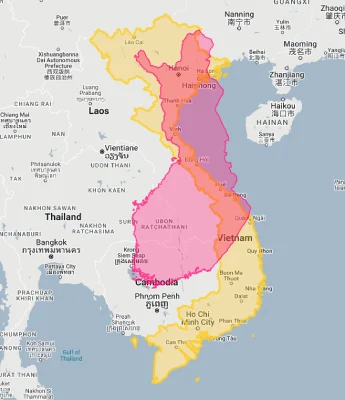
- Finland vs. Vietnam: Finland is slightly larger than Vietnam (331,212 km²), though Vietnam has 19 times Finland’s population.
- Finland vs. Nordic Neighbors: While Finland is larger than Denmark and slightly smaller than Germany, it’s considerably smaller than its Nordic neighbors Sweden (450,295 km²) and Norway (385,207 km²).

Finland’s Geographic Diversity: Land of a Thousand Lakes
Finland features distinctive geographic characteristics:
- Lakes: Finland is known as “the land of a thousand lakes,” though it actually contains approximately 188,000 lakes, covering about 10% of the country’s total area
- Forests: About 75% of Finland is covered by forests, making it one of Europe’s most heavily forested countries
- Arctic Fells: Northern Finland (Lapland) features numerous fells – gently rounded mountains or high plateaus – with Halti being the highest point at 1,324 meters (4,344 feet)
- Archipelagos: Finland’s coastline is highly indented, with thousands of islands forming archipelagos, particularly in the southwest
- Wetlands: Extensive peatlands and bogs cover about one-third of Finland’s land area, particularly in the north and east
The Finnish Lakeland: Europe’s Largest Lake District
The Finnish Lakeland forms the heart of Finland’s distinctive geography:
- This vast lake district covers approximately 100,000 square kilometers (38,610 square miles) in central and eastern Finland
- Lake Saimaa, Finland’s largest lake and the fourth-largest in Europe, covers 4,400 square kilometers (1,700 square miles)
- The region was formed by glacial action during the last ice age, which created the distinctive pattern of interconnected lakes and eskers (ridges of stratified sand and gravel)
- Major cities in the region include Kuopio, Joensuu, Mikkeli, and Savonlinna
- The complex network of lakes and waterways once served as the main transportation system for this region before the development of modern roads
Population Distribution: Southern Concentration
Finland’s population distribution reflects environmental and historical patterns:
- With approximately 5.5 million people, Finland has one of Europe’s lowest population densities at about 16 people per square kilometer
- This density varies dramatically, with the Helsinki metropolitan area exceeding 3,000 people per square kilometer while Lapland in the north has fewer than 2 people per square kilometer
- About 85% of Finns live in the southern third of the country, below the 65th parallel
- The Helsinki metropolitan area (including the cities of Helsinki, Espoo, and Vantaa) is home to about 1.5 million people – more than 25% of Finland’s total population
- Despite this concentration, Finland maintains a relatively even distribution of mid-sized cities throughout the southern and central regions
Finland’s Regions: Administrative Diversity
Finland is divided into 19 regions (maakunta), each with distinctive characteristics:
| Finnish Region | Area (km²) | Comparable Area |
|---|---|---|
| Lapland (largest region) | 98,984 | Slightly larger than Portugal (92,212 km²) |
| North Ostrobothnia | 45,852 | Similar to Estonia (45,227 km²) |
| Uusimaa (incl. Helsinki) | 9,568 | Similar to Cyprus (9,251 km²) |
| Central Finland | 19,950 | Similar to Israel (20,770 km²) |
| Åland Islands (smallest region) | 1,580 | Similar to Greater London (1,569 km²) |
Geography and Climate: Northern Extremes
Finland’s high latitude creates distinctive seasonal contrasts:
- Finland has a cold temperate climate with continental influences, particularly in the eastern and northern regions
- In Lapland within the Arctic Circle, the sun doesn’t set for about 73 days during summer (midnight sun) and doesn’t rise for about 51 days during winter (polar night)
- Average July temperatures range from 15°C to 17°C (59°F to 63°F) in most of the country, while January averages range from -4°C to -14°C (25°F to 7°F), with colder temperatures in the north
- Annual precipitation averages 500-700 mm across much of Finland, with snow cover typically lasting 3-4 months in the south and 5-7 months in the north
- The Gulf Stream moderates Finland’s climate, making it significantly warmer than other regions at similar latitudes such as Alaska or Siberia
Borders and Access: The Baltic Connection
Finland’s position gives it strategic importance in Northern Europe:
- Finland shares 1,340 kilometers (832 miles) of border with Russia, representing a significant portion of the EU’s border with Russia
- The western border with Sweden extends 614 kilometers (382 miles), while the northern border with Norway spans 736 kilometers (457 miles)
- Finland’s coastline stretches approximately 1,250 kilometers (776 miles) along the Baltic Sea, including the Gulf of Finland and the Gulf of Bothnia
- Despite lacking direct access to the Atlantic Ocean, Finland maintains important maritime connections through the Baltic Sea
- The Port of Helsinki is Finland’s busiest passenger harbor, while HaminaKotka is the largest cargo port
Natural Resources: Forests and Minerals
Finland’s landscape provides distinctive natural resources:
- Forests are Finland’s most important natural resource, supporting one of the world’s most advanced forestry industries and providing about 20% of Finland’s export revenue
- Finland has significant deposits of metals and minerals, including chromium, zinc, copper, nickel, and gold
- Water resources are abundant, supporting hydroelectric power generation and providing 85% of Finns with naturally clean groundwater for drinking
- Peat, harvested from extensive peatlands, serves as a domestic energy source
- The country lacks significant fossil fuel deposits but has developed substantial renewable energy capacity, particularly in biomass, hydropower, and wind energy
Geographic Challenges: Climate and Distance
Finland’s environment creates specific challenges:
- Harsh Winters: Extreme cold, extensive snow cover, and limited daylight during winter months create energy, transportation, and infrastructure challenges
- Long Distances: Finland’s elongated shape means significant distances between northern and southern regions, requiring extensive transportation infrastructure
- Baltic Sea Health: As a shallow, enclosed sea with limited water exchange, the Baltic Sea faces serious environmental challenges including eutrophication and pollution
- Seasonal Flooding: Spring snowmelt can cause significant flooding in many regions
- Climate Change: Finland is warming faster than the global average, with the Arctic region warming particularly quickly, affecting ecosystems, permafrost, and traditional livelihoods
Explore More Size Comparisons
Curious about how other major countries and regions compare in true size? Check out these related articles:
- The True Size of Sweden: Nordic Nation Larger Than Most Realize
- The Real Size of Germany
- The Real Size of Iceland: Island Nation Punching Above Its Weight
- The True Size of USA
- Complete List of Countries by True Size
Sources & Further Reading
- Statistics Finland. (2023). Environment and Natural Resources.
- Finnish Environment Institute. (2022). Geographical Information.
- CIA World Factbook. (2023). Finland.