United Kingdom
World Rank: #78
242,495 km² (93,628 sq mi)


Next Larger Country
(Rank #77)
Guinea
245,857 km² (94,926 sq mi)

Next Smaller Country
(Rank #79)
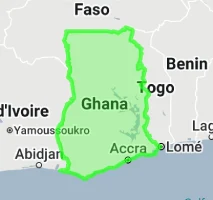
Ghana
238,533 km² (92,099 sq mi)
United Kingdom: The Tiny Island Nation That Ruled a Quarter of Earth
Did you know the United Kingdom is smaller than Minnesota yet once controlled the largest empire in human history? Or that this island nation is roughly the same size as Romania despite wielding exponentially more global influence?
Welcome to the surprising reality of the United Kingdom – a country whose historical, financial, and cultural power vastly outstrips its modest physical dimensions. Ranking a mere 78th globally with just 242,495 square kilometers (93,628 square miles), the UK is approximately the same size as Uganda and smaller than countries like Laos, Guinea, and Romania that command far less global attention.
In this article, we’ll drag the UK across the map to reveal how this North Atlantic archipelago truly measures up against other nations. Located between 49°N and 61°N latitude, the UK experiences some map distortion that makes Scotland appear somewhat larger than its true size in standard Mercator projections, but this effect is minor compared to more northerly countries.
Despite its compact dimensions, the UK packs extraordinary diversity into its limited territory, stretching about 1,407 kilometers (874 miles) from the Shetland Islands in the north to the Isles of Scilly in the south. This island nation’s jagged coastline stretches an impressive 31,368 kilometers (19,491 miles) – the 12th longest in the world despite ranking 78th in area!
Here is a video made with our interactive country comparison map (adjusts for Mercator projection distortion) that shows how big UK actually is:
Watch how the United Kingdom compares when overlaid on other countries. We’ve moved it across the USA, Australia, Brazil, and many other nations to reveal its true proportions. You can use this country size comparison interactive map here.
7 Mind-Blowing UK Size Facts
- The UK is 94 times smaller than Australia, yet has nearly 3 times its population
- Texas is 2.8 times larger than the entire United Kingdom
- The UK is 40 times smaller than the USA but has 1/5 of its population
- You could fit 11 United Kingdoms inside India with room to spare
- The UK is 22% smaller than Italy despite similar levels of economic output
- At its peak, the British Empire controlled 35.5 million km² – 146 times the UK’s own size
- The UK’s coastline (31,368 km) is longer than Brazil’s (7,491 km), despite Brazil being 35 times larger
United Kingdom’s True Size in Global Perspective
To appreciate the UK’s actual dimensions, these direct comparisons with familiar regions offer eye-opening context:

UK vs. Japan: The United Kingdom is approximately 36% smaller than Japan (377,975 km²), though both are island nations with significant global influence
| Comparison | Flag | Area (km²) | Size Relative to UK |
|---|---|---|---|
| United Kingdom | |
242,495 | 1.0 |
| Romania |  |
238,397 | 0.98 times UK’s size |
| Guinea | |
245,857 | 1.01 times UK’s size |
| Uganda |  |
241,038 | 0.99 times UK’s size |
| Minnesota (US state) |  |
225,181 | 0.93 times UK’s size |
| Laos |  |
236,800 | 0.98 times UK’s size |
| Malaysia (Peninsular only) |  |
132,265 | 0.55 times UK’s size |
5 Surprising UK Size Comparisons
- UK vs. Texas: The entire United Kingdom (242,495 km²) would fit inside Texas (695,662 km²) nearly three times. In fact, Texas is 2.8 times larger than the UK despite being just one of 50 US states.

- UK vs. Japan: Despite similar roles as influential island nations, Japan (377,975 km²) is 56% larger than the United Kingdom. This size difference is equivalent to all of England – the UK’s largest constituent country.
UK overlaid on Japan. - UK vs. USA:

- UK vs. New Zealand: Despite similar cultural heritage, New Zealand (268,021 km²) is actually 10% larger than the United Kingdom – surprising many Britons who typically perceive New Zealand as much smaller.

- UK vs. Former Colonies: Perhaps most strikingly, the UK is dwarfed by its former colonies: Australia (7,692,024 km²) is 32 times larger, Canada (9,984,670 km²) is 41 times larger, and India (3,287,263 km²) is 14 times larger than the former imperial power.

The British Paradox: Maximum Influence from Minimal Territory
How did such a small country create one of history’s most significant global footprints?
The Empire Factor
At its peak in the 1920s, the British Empire encompassed 35.5 million square kilometers – approximately 26% of Earth’s land surface and 146 times larger than the UK itself. This created a psychological “size magnification” where the UK’s global reach led many to perceive Great Britain as physically larger than it is. Even today, this historical legacy inflates perceptions of the UK’s territorial extent.
The London Effect
London remains one of the world’s most significant financial, cultural, and political centers – a true “alpha++ global city” alongside New York. With London’s outsized global influence, many subconsciously extrapolate this prominence to the entire UK’s physical size. This metropolitan powerhouse, with 9.5 million residents, anchors a country just 1/40th the size of the USA.
The Economic Disproportion
The UK maintains the world’s 6th largest economy by GDP ($3.1 trillion) despite its modest size. This creates a dramatic economic-to-territorial disproportion, with the UK generating approximately $12.8 million in GDP per square kilometer – nearly 12 times higher than the United States ($1.06 million per km²) and 100 times higher than Russia ($127,000 per km²).
The Island Psychology
Islands often appear larger on mental maps than continental territories, partly because they’re surrounded by water and typically shown in isolation. This “island effect” magnifies the UK’s perceived size, particularly when viewed on separate European maps rather than world maps where its true dimensions become more apparent relative to larger landmasses.
The United Kingdom’s Geographic Diversity: Four Nations in Limited Space
The UK packs remarkable diversity into its compact territory:
- Four Distinct Nations: Within just 242,495 square kilometers, the UK contains four separate countries – England, Scotland, Wales, and Northern Ireland – each with distinct cultural identities, landscapes, and in some cases, their own parliaments and legal systems. This makes the UK one of the world’s most complex small countries, with three separate legal systems operating within its modest borders.
- Extraordinary Coastline: Despite ranking 78th in total area, the UK boasts the world’s 12th longest coastline at 31,368 kilometers (19,491 miles) – longer than the coastlines of India, Brazil, and Argentina combined. This creates an exceptional coast-to-area ratio, with 1 kilometer of coastline for every 7.7 square kilometers of land (compared to the USA’s 1:381 ratio).
- Highland to Lowland: Within relatively short distances, the UK transitions from the Scottish Highlands (with Ben Nevis reaching 1,345 meters/4,413 feet) to the gentle rolling countryside of southern England. The UK contains 15 national parks within its limited territory, protecting approximately 10% of England, 20% of Wales, and 7% of Scotland’s land area.
- Island Wealth: The UK includes over 6,000 islands and islets, though only 803 exceed 5 hectares (12 acres). This archipelagic character contributes to its extensive coastline and creates extraordinary environmental diversity, from the subtropical Isles of Scilly (with palm trees and temperatures rarely dropping below freezing) to the subarctic Shetland Islands (closer to the Arctic Circle than to London).
- Geological Variety: The UK’s small area contains rocks from nearly every geological period across 3 billion years of Earth’s history. This remarkable geological diversity includes everything from 3-billion-year-old Lewisian gneiss in northwest Scotland (some of Europe’s oldest rocks) to the chalk deposits of southern England formed just 60 million years ago – creating what geologists call “the world’s geological jukebox.”
The UK’s Nations and Regions: A Kingdom of Contrasts
The United Kingdom’s limited territory is divided into distinctive nations and regions:
| Nation/Region | Area (km²) | Comparable To | Major City |
|---|---|---|---|
| England | 130,279 | Slightly larger than Greece (131,957 km²) | London |
| Scotland | 77,933 | Similar to Czech Republic (78,866 km²) | Edinburgh |
| Wales | 20,779 | Similar to Israel (20,770 km²) | Cardiff |
| Northern Ireland | 13,843 | Similar to Montenegro (13,812 km²) | Belfast |
| Greater London (metropolitan area) |
1,569 | Larger than São Tomé and Príncipe (964 km²) | London |
| Isle of Man (Crown Dependency) |
572 | Slightly smaller than Singapore (728 km²) | Douglas |
| Channel Islands (Crown Dependencies) |
198 | Similar to Saint Lucia (616 km²) | Saint Helier |
Population Density: Europe’s Crowded Island
The UK’s 67 million inhabitants are packed into its limited space:
- With approximately 67 million residents in just 242,495 square kilometers, the UK maintains one of Europe’s highest population densities at 281 people per square kilometer (727 per square mile) – more than twice that of China (153/km²) and nearly eight times that of the United States (36/km²).
- This density varies dramatically across the UK: England averages 434 people per square kilometer, while Scotland has just 70 people per square kilometer. Perhaps most striking is the concentration in Southeast England, where over 9.5 million people live in Greater London – a region occupying just 0.64% of the UK’s already limited territory.
- England alone packs 56.5 million people into 130,279 square kilometers – creating a population density higher than Japan, India, and Vietnam. If England were an independent country, it would be the 4th most densely populated large nation (over 100,000 km²) in the world.
- The UK’s compact size creates close proximity between significant cities. Approximately 85% of the UK population lives within a 250-mile radius of London – an area smaller than Oregon. The distance from London to Edinburgh (the two largest cities) is just 533 kilometers (331 miles) – less than the distance from New York to Pittsburgh.
- Despite limited space, the UK manages to preserve significant green areas. Surprisingly, just 6% of the UK is classified as “urban” or “built-on” land, with the remainder being agricultural (63%), forest and woodland (15%), and other natural environments (16%). Even in densely populated England, 80% of the land remains undeveloped – primarily dedicated to agriculture.
Economic Footprint: Global Output from Minimal Territory
The UK generates extraordinary economic output from its limited land area:
- Despite occupying just 0.16% of the world’s land area, the United Kingdom maintains the world’s 6th largest economy with a GDP of approximately $3.1 trillion – producing more economic output than countries like India, Brazil, and Canada with vastly larger territories.
- The UK generates approximately $12.8 million in GDP per square kilometer – ranking 3rd globally among major economies (>$1 trillion GDP) behind only South Korea ($16.7 million/km²) and Japan ($14.2 million/km²), and far exceeding the United States ($1.06 million/km²), China ($1.95 million/km²), and Russia ($127,000/km²).
- London alone generates approximately $630 billion in annual GDP – roughly equivalent to the entire economy of Switzerland – from a land area of just 1,569 square kilometers. This creates the extraordinary economic density of $401 million per square kilometer in Greater London – among the highest concentrations of economic output on Earth.
- Despite limited agricultural territory (just 17.6 million hectares), the UK’s farming sector demonstrates remarkable efficiency, producing approximately 60% of the country’s food needs from less than 0.35% of the world’s agricultural land. The country’s territorial limitations have driven agricultural innovations that produce yields 3 times the global average for many crops.
- The UK’s service sector – particularly financial services – demonstrates extraordinary territorial efficiency. The UK financial sector contributes approximately $190 billion to the economy annually (6.9% of GDP) while occupying less than 0.02% of the nation’s limited land area – primarily concentrated in London’s Square Mile and Canary Wharf districts.
Environmental Challenges: Limited Space, Maximum Pressure
The UK’s compact geography creates specific environmental challenges:
- Land Use Competition: With limited territory and high population density, the UK faces intense competition for land use between housing, agriculture, industry, recreation, and conservation. This creates particular pressure around major cities, where housing demand drives development pressure on green belts – protected open land surrounding urban areas designed to prevent urban sprawl.
- Coastal Vulnerability: The UK’s 31,368-kilometer coastline, combined with its high-density coastal development, creates significant vulnerability to erosion and flooding – challenges expected to intensify with climate change. Approximately 1.8 million properties in England alone are at risk from coastal or river flooding, with particular concerns for low-lying eastern regions.
- Biodiversity Loss: The UK’s intensive land use has resulted in substantial habitat fragmentation and biodiversity decline. The country ranks in the bottom 10% globally for biodiversity intactness, having lost approximately 50% of its biodiversity since the Industrial Revolution – a more severe decline than many larger nations with more territory to absorb development impacts.
- Water Stress: Despite the UK’s famously rainy reputation, the densely populated southeast experiences water stress, with per-capita water availability in this region comparable to parts of Mediterranean Europe. The limited territory creates challenges for reservoir development, with water infrastructure struggling to meet demands in Europe’s most water-stressed capital city (London).
- Renewable Energy Constraints: The UK’s limited land area creates particular challenges for large-scale renewable energy deployment, especially for space-intensive technologies like solar farms. This has directed the UK’s renewable strategy toward offshore wind, where the country leads with the world’s largest installed capacity (over 13.7 GW) – making strategic use of its extensive maritime territory to compensate for limited land.
Global Footprint: Outsized Influence from Limited Territory
The UK’s impact extends far beyond its modest borders:
- Linguistic Reach: Despite originating from a small island nation, English has become the world’s global lingua franca, spoken by approximately 1.5 billion people worldwide (about 20% of the global population). The English language’s spread far exceeds the UK’s territorial limitations, with more English speakers in India alone than in the UK, USA, and Canada combined.
- Educational Magnetism: The UK hosts over 605,000 international students annually despite its limited size – the world’s second most popular education destination after the much larger United States. With just 0.16% of the world’s land area, the UK contains 4 of the world’s top 10 universities according to various global rankings.
- Cultural Production: From its modest territorial base, the UK generates extraordinary cultural output, ranking as the world’s second-largest exporter of cultural goods (after the United States) worth approximately $34 billion annually. The BBC alone reaches a global audience of 468 million weekly – reaching more people than the combined populations of the USA and Indonesia.
- Scientific Output: Despite limited size, the UK produces approximately 7% of the world’s scientific research papers and 14% of the world’s most highly-cited scientific publications. With just 0.87% of the global population, UK-based scientists have been awarded 99 Nobel Prizes in scientific fields – second only to the United States.
- Financial Hub: London remains the world’s second-largest financial center after New York, commanding an outsized global influence relative to the UK’s physical dimensions. The UK accounts for 6% of global equity market capitalization, 15% of international bank lending, and 43% of global foreign exchange trading – all from a country occupying just 0.16% of the world’s land area.
Global Territories: Extended British Presence
Beyond the UK mainland, Britain maintains smaller territories worldwide:
- The United Kingdom retains sovereignty over 14 Overseas Territories – scattered remnants of the former British Empire covering approximately 18,002 square kilometers (6,950 square miles) of land. These territories, including Bermuda, Gibraltar, the Falkland Islands, and others, contain a combined population of approximately 150,000.
- While modest in land area, these territories give the UK control over vast maritime zones. The British Overseas Territories provide the UK with approximately 6.8 million square kilometers of marine territory – nearly 28 times the UK’s land area and the world’s fifth-largest Exclusive Economic Zone.
- The British Indian Ocean Territory alone, though just 60 square kilometers of land, controls 640,000 square kilometers of ocean – more than twice the UK’s entire land area. This territory hosts Diego Garcia, a strategically significant joint UK-US military facility that extends British influence far beyond its European homeland.
- The UK’s scattered territories give it a presence in all major oceans and create extraordinary biodiversity responsibility. The UK actually governs more penguin species than any other nation on Earth, with significant populations in the Falkland Islands, South Georgia, and the British Antarctic Territory.
- Beyond its overseas territories, the UK maintains close relationships with 54 Commonwealth nations – former imperial possessions covering nearly a third of the world’s land area and containing 2.4 billion people. Though mostly symbolic, this network extends British soft power far beyond what its modest size would suggest.
Explore More Size Comparisons
Curious about how other major countries and regions compare in true size? Check out these related articles:
- Real Size Of Germany: Central European Power’s True Dimensions
- Real Size Of France: Western European Nation Larger Than You Think
- Real Size Of Japan: Island Nation’s Surprising Dimensions
- Complete List of Countries by True Size
Sources & Further Reading
- Office for National Statistics. (2024). Geographical Information and National Statistics.
- Royal Geographical Society. (2023). Physical Geography of the United Kingdom.
- British Geological Survey. (2024). UK Terrain and Geology.
- CIA World Factbook. (2024). United Kingdom.