Romania
World Rank: #83
238,397 km² (92,046 sq mi)

Next Larger Country
(Rank #82)
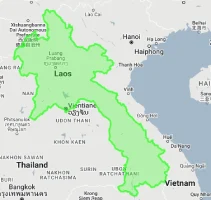
Laos
236,800 km² (91,429 sq mi)
Next Smaller Country
(Rank #84)
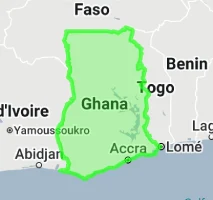
Ghana
238,533 km² (92,099 sq mi)
Romania: The Carpathian Treasure Nearly Identical to UK in Size
Did you know Romania and the United Kingdom are almost exactly the same size? Or that Romania contains Europe’s largest undisturbed forest, but is smaller than 10 U.S. states?
Welcome to the fascinating dimensions of Romania – a country whose natural treasures and geographic diversity belie its modest footprint. Ranking 83rd globally with 238,397 square kilometers (92,046 square miles), Romania is virtually identical in size to the United Kingdom (242,495 km²) but houses just one-third the population. This Eastern European gem is also nearly the same size as Ghana and Uganda, though these comparisons rarely enter public consciousness.
In this article, we’ll drag Romania across the map to reveal how this Carpathian nation truly measures up against other countries. Located between 43.6°N and 48.3°N latitude, Romania experiences minimal map distortion on standard projections, meaning what you see is what you get – a compact, roughly circular nation at the crossroads of Central, Eastern, and Southeastern Europe.
Despite its moderate size, Romania packs extraordinary geographic diversity into its borders, stretching from the Carpathian Mountains through the Transylvanian Plateau to the Danube Delta – Europe’s largest wetland. Its nearly circular shape creates a relatively efficient territory, with the maximum distance across Romania being just 600 kilometers (373 miles) – roughly the same as driving from New York City to Richmond, Virginia.
Here is Romania’s true size compared to other countries (videos created with our interactive map tool that adjusts for Mercator projection distortion):
Watch how Romania compares when overlaid on other countries. We’ve moved it across the USA, Western Europe, Australia, and many other nations to reveal its true proportions. You can use this country size comparison interactive map here.
7 Surprising Romania Size Facts
- Romania is virtually identical in size to the United Kingdom (just 1.7% smaller)
- Romania is smaller than Minnesota but larger than Idaho
- Despite modest size, Romania contains Europe’s largest undisturbed forest area
- Romania is 6 times smaller than Texas but has nearly the same population
- The Danube Delta alone covers 5,800 km² – larger than the entire country of Trinidad and Tobago
- Romania is about 65% the size of Germany but has just 24% of its population
- Romania’s territory could fit into Brazil 35 times and into Russia 71 times
Romania’s True Size in Global Perspective
To appreciate Romania’s actual dimensions, these direct comparisons with familiar regions offer eye-opening context:

Romania vs. United Kingdom: Romania is nearly identical in size to the UK (238,397 km² vs. 242,495 km²), with just a 1.7% difference
| Comparison | Flag | Area (km²) | Size Relative to Romania |
|---|---|---|---|
| Romania | |
238,397 | 1.0 |
| United Kingdom |  |
242,495 | 1.02 times Romania’s size |
| Ghana | |
238,533 | 1.001 times Romania’s size |
| Laos | |
236,800 | 0.99 times Romania’s size |
| Minnesota (US state) |  |
225,181 | 0.94 times Romania’s size |
| Uganda |  |
241,038 | 1.01 times Romania’s size |
| Belarus |  |
207,600 | 0.87 times Romania’s size |
5 Fascinating Romania Size Comparisons
- Romania vs. United Kingdom: Romania (238,397 km²) and the United Kingdom (242,495 km²) are remarkably similar in size with just a 1.7% difference – about the area of London. However, Romania’s population of 19 million is less than one-third of the UK’s 67 million, creating a much lower population density.
- Romania vs. American States: Romania is smaller than 10 U.S. states, including Minnesota (225,181 km²). If placed in the eastern United States, Romania would cover roughly the area from New York City to halfway through Virginia – a substantial but not massive footprint.

- Romania vs. Germany: Romania is approximately 65% the size of Germany (357,022 km²), though with just 24% of Germany’s population. This significant size comparison surprises many Europeans, who often perceive Romania as a much smaller country relative to Western European nations.

- Romania vs. Japan: Romania is 63% the size of Japan (377,975 km²) despite Japan having nearly 7 times Romania’s population. This comparison highlights how Romania’s modest population density allows for extensive natural areas within its moderate territory.

- Romania vs. Ghana: Romania and Ghana (238,533 km²) are almost exactly the same size with just a 0.06% difference – equivalent to about 136 km² or roughly the size of Liechtenstein. This remarkable size similarity between European and African nations often goes unnoticed in global geography discussions.

- Romania vs. Russia:

Romania’s Geographic Significance: Greater Than Its Size
Romania’s moderate dimensions belie its outsized environmental and geographic significance:
European Biodiversity Haven
Despite occupying just 2.4% of Europe’s land area, Romania contains an astonishing 33% of the continent’s freshwater reserves and hosts approximately 60% of Europe’s brown bear population. The country houses nearly half of Europe’s remaining old-growth forest, with the Carpathian Mountain chain forming Europe’s largest continuous forest ecosystem – creating a biodiversity hotspot disproportionate to Romania’s modest size.
Continental Crossroads
Romania’s position at the intersection of Central, Eastern, and Southeastern Europe creates a distinctive geographical crossroads. Located at the meeting point of three major European regions, Romania forms a crucial transition zone between different climatic, cultural, and ecological systems. This position makes Romania’s territory, despite its modest size, a critical junction between the Continental, Mediterranean, and Pontic (Black Sea) influences.
River Basin Significance
Romania contains over 98% of the Danube Delta – Europe’s second-largest and best-preserved delta (5,800 km²) and a UNESCO World Heritage site. The country’s territory includes portions of the Danube River Basin that are critical to Europe’s watershed systems. Despite Romania’s moderate size, it controls key segments of Europe’s second-longest river as it approaches the Black Sea, giving this medium-sized country outsized hydrological importance.
Resource Concentration
Within its limited territory, Romania possesses remarkable resource diversity, including Europe’s largest gold deposits at Roșia Montană, the continent’s third-largest natural gas reserves, and significant oil reserves – the largest in Eastern Europe outside Russia. This resource concentration in a country smaller than 10 US states gives Romania natural wealth disproportionate to its territorial footprint.
Romania’s Geographic Diversity: Extraordinary Variety in Limited Space
Romania packs remarkable landscape diversity into its moderate territory:
- Balanced Geographic Distribution: Romania’s territory is organized in a remarkably balanced pattern – approximately 31% mountains (the Carpathians), 36% hills and plateaus (Sub-Carpathians and the Transylvanian Plateau), and 33% plains (Romanian Plain and Western Plain). This creates an almost perfect three-way split between major landform types within a relatively compact national territory.
- Carpathian Dominance: The Carpathian Mountains form Romania’s backbone, covering about 31% of its territory with peaks reaching 2,544 meters (8,346 feet) at Moldoveanu. This mountain range creates Romania’s distinctive horseshoe shape and houses over 400,000 hectares of virgin forest – the largest undisturbed forest area remaining in Europe outside Russia. These forests contain trees over 600 years old and provide habitat for Europe’s largest population of brown bears, wolves, and lynx.
- The Danube Delta Treasure: Romania’s territory includes 82% of the Danube Delta – a UNESCO Biosphere Reserve spanning 5,800 square kilometers (2,239 square miles). This remarkable wetland, Europe’s second-largest delta, represents 2.5% of Romania’s total area yet hosts over 300 bird species (nearly 60% of Romania’s bird diversity) and 45 freshwater fish species in a complex maze of channels, lakes, and reed islands that continues to expand into the Black Sea at a rate of 40 meters annually.
- Rare Geological Features: Despite modest size, Romania contains several globally rare geological features, including Europe’s only desert (the Oltenian Sahara), the continent’s largest mud volcanoes at Berca, and the Scărișoara Ice Cave – containing the world’s second-largest underground glacier with ice up to 4,000 years old. The country also contains 60% of Europe’s mineral water springs and the world’s largest salt mine at Slănic Prahova.
- Coastline and Delta: Romania’s limited 245-kilometer (152-mile) Black Sea coastline might appear modest, but it includes a remarkable transition zone where Europe’s second-largest river meets the sea. The Danube Delta’s growth continues to expand Romania’s territory by approximately 40 meters per year through sediment deposition, making it one of the few European countries naturally gaining land area without human intervention.
Romania’s Regions: Administrative Geography
Romania’s moderate territory is divided into 41 counties (județe) plus the capital Bucharest, organized within eight development regions:
| Romanian Region | Area (km²) | Comparable To | Major City |
|---|---|---|---|
| Sud-Muntenia (largest region) |
34,453 | Slightly larger than Moldova (33,846 km²) | Ploiești |
| Nord-Est | 36,850 | Similar to Taiwan (36,193 km²) | Iași |
| Centru (Transylvania region) |
34,100 | Similar to Moldova (33,846 km²) | Brașov |
| Sud-Est (includes Danube Delta) |
35,762 | Similar to Taiwan (36,193 km²) | Constanța |
| Bucharest-Ilfov (smallest region) |
1,821 | Larger than São Tomé and Príncipe (964 km²) | Bucharest |
| Timișoara County (western county) |
8,697 | Similar to Cyprus (9,251 km²) | Timișoara |
| Suceava County (northern county) |
8,553 | Similar to Puerto Rico (8,870 km²) | Suceava |
Population Distribution: Europe’s Space-Rich Nation
Romania’s 19 million inhabitants are distributed across its territory with notable patterns:
- With approximately 19 million residents, Romania maintains a moderate population density of 80 people per square kilometer (207 per square mile) – less than half that of Germany (232/km²) or the United Kingdom (281/km²) and comparable to Turkey (109/km²) and Bulgaria (63/km²).
- Romania’s population distribution follows its geography, with lower densities in the Carpathian Mountains (as low as 20-40 people/km²) and higher concentrations in the southern plains, western regions near Hungary, and around Bucharest. The capital region (Bucharest-Ilfov) has an exceptional density of 1,370 people per square kilometer – 17 times the national average.
- Unlike many European countries, Romania lacks a dominant primate city system. While Bucharest (1.8 million) is the largest city, Romania maintains a balanced urban network with six other cities exceeding 250,000 inhabitants: Cluj-Napoca, Timișoara, Iași, Constanța, Craiova, and Brașov – creating regional centers distributed across the country’s moderate territory.
- Romania has experienced significant population decline since its 1990 peak of 23.2 million, losing nearly 4.2 million people (18%) through emigration and low birth rates. This has created a paradoxical situation – a country with unchanged borders but steadily decreasing population density, bucking the global trend of increasing crowding.
- The country’s modest size combined with population decline has created growing space and ecological opportunity. Romania’s demographic shift has allowed for wolf and bear population increases, rural rewilding, and forest expansion – making Romania one of the few European countries gaining wilderness despite having a territory 24 times smaller than neighboring Ukraine.
Resource Wealth: Concentrated Treasures in Modest Territory
Romania’s limited territory contains surprising resource wealth:
- Hydrocarbon Significance: Despite occupying just 0.16% of the world’s land area, Romania was historically a major oil producer and still maintains the largest petroleum reserves in Eastern Europe outside Russia. The country holds proven crude oil reserves of approximately 600 million barrels and the EU’s third-largest natural gas reserves at about 726 billion cubic feet – remarkable resource concentrations for a country smaller than Minnesota.
- Mineral Diversity: Romania’s compact territory contains Europe’s largest gold deposits at Roșia Montană (estimated at 314 tonnes), significant copper reserves in the Apuseni Mountains, and substantial deposits of silver, lead, zinc, manganese, and uranium. The country also holds Europe’s largest deposits of non-ferrous and rare metals relative to territorial size.
- Agricultural Efficiency: Despite moderate size, Romania contains 14.7 million hectares of agricultural land – approximately 62% of its territory and the 5th highest proportion in the EU. This creates a concentration of arable land equivalent to 0.41 hectares per person (compared to the EU average of 0.21), making Romania Europe’s 6th largest agricultural producer from a territorial base that ranks just 12th in the EU.
- Renewable Energy Potential: Romania’s geographic diversity creates exceptional renewable energy concentration within limited space. Its territory has Europe’s 5th highest wind energy potential (14,000 MW), substantial geothermal reserves (1,167 MW potential), high solar irradiation in southern regions, and hydroelectric capacity exceeding 12,000 MW – creating among Europe’s highest renewable energy potentials per square kilometer.
- Timber Resources: Romania’s 6.9 million hectares of forest (29% of territory) represent Europe’s 6th largest forest area, containing approximately 2.5 billion cubic meters of standing timber – the 4th largest wood resource in the EU despite the country’s moderate size. This forest holds Europe’s largest continuous stand of pristine woods, including 65% of the continent’s virgin forests outside of Russia.
Geographical Challenges: Carpathian Constraints
Romania’s territory creates specific geographic challenges:
- Transportation Barriers: Despite moderate size, Romania’s Carpathian Mountains create significant internal transportation challenges. The mountain range forms a horseshoe shape that effectively divides the country, with only a few major mountain passes connecting Transylvania to the southern and eastern regions. This has historically complicated infrastructure development, with just 931 kilometers of highways in a country the size of the UK (which has 3,838 km).
- Flood Vulnerability: Romania’s position in the lower Danube Basin makes it particularly vulnerable to flooding, with approximately 13% of its territory (roughly 30,000 km²) classified as floodplain. The country experiences major floods approximately every 5-7 years, including devastating events in 2005 and 2010 that affected over 1,500 communities – a particular challenge given Romania’s limited size and significant agricultural dependence.
- Seismic Risk: Romania experiences Europe’s most significant crustal earthquakes outside the Mediterranean, particularly in the Vrancea region. Despite occupying just 0.16% of the world’s land area, Romania accounts for approximately 0.9% of global seismic energy release, with the potential for 7.5+ magnitude earthquakes that can affect up to 60% of the national territory – an unusually high seismic risk concentration for a moderate-sized European country.
- Regional Disparities: Within its limited territory, Romania shows some of Europe’s most pronounced development disparities. The GDP per capita in the Bucharest-Ilfov region (reaching 160% of the EU average) contrasts sharply with the Northeast Region (39% of the EU average) – creating economic inequality across distances of less than 400 kilometers that rivals disparities between Western and Eastern Europe.
- Transboundary Challenges: As a moderately-sized nation sharing borders with five countries (Hungary, Ukraine, Moldova, Bulgaria, and Serbia), Romania faces particular challenges in transboundary environmental management. The country’s position in the Lower Danube basin makes it especially vulnerable to upstream pollution, while its Black Sea coastline requires international coordination to address marine environmental issues – creating complex diplomacy requirements despite the country’s limited size.
Border Significance: The EU’s Eastern Frontier
Romania’s position creates distinctive border dynamics:
- Romania shares a 2,508-kilometer (1,558-mile) land border with five countries: Ukraine (649 km), Moldova (681 km), Bulgaria (631 km), Serbia (546 km), and Hungary (448 km). This creates one of the EU’s longest external borders relative to national territory, with Romania maintaining 1,330 kilometers of the EU’s eastern frontier – approximately 43% of the country’s total land borders.
- The country’s modest territory includes a strategically significant 245-kilometer (152-mile) Black Sea coastline, providing Romania with an Exclusive Economic Zone of approximately 25,000 square kilometers. This maritime area grants Romania access to offshore oil and gas fields containing an estimated 200 million barrels of oil equivalent – substantial resources for a country of Romania’s size.
- Romania’s border with Moldova represents a unique case of linguistic and cultural continuity divided by a national boundary. The two countries share nearly identical languages and cultural traditions, with the border being primarily the result of Soviet territorial annexation in 1940. This creates Europe’s only case where a majority of native speakers of a national language (Romanian) live outside the language’s primary nation-state.
- The Danube River forms 1,075 kilometers of Romania’s southern and southwestern borders with Bulgaria, Serbia, and part of Ukraine. This major European waterway not only delineates the boundary but also provides transportation access equivalent to 45% of Romania’s land borders – an unusual case where a single river defines such a substantial portion of a mid-sized country’s international boundaries.
- Romania controls access to the Danube Delta, Europe’s second-largest and best-preserved delta, giving this moderate-sized country outsized significance in environmental governance of a major European watershed system that drains territories from 19 countries covering 10% of continental Europe.
Global Connections: Beyond Physical Size
Romania’s influence extends beyond its territorial limitations:
- Diaspora Reach: Despite its modest size, Romania has generated one of Europe’s largest diasporas, with approximately 5.7 million Romanians living abroad – equivalent to nearly 30% of the country’s current population. This creates a Romanian presence in countries like Italy (1.2 million), Spain (800,000), Germany (700,000), the UK (500,000), and the USA (460,000) that extends Romanian cultural influence far beyond its territorial boundaries.
- Latin Outpost: Romania occupies a distinctive position as the easternmost Romance language country, creating a “Latin island” surrounded by Slavic, Hungarian, and Turkic linguistic regions. This gives Romania unique cultural bridging capabilities between Latin/Western European traditions and Eastern European contexts, despite occupying just 2.4% of Europe’s land area.
- Digital Emergence: Despite territorial limitations, Romania has developed one of Europe’s fastest internet networks (ranking 5th globally in average connection speeds) and a thriving IT sector that contributed 6.9% to GDP from a territorial base similar in size to Ghana. The country produces approximately 8,500 IT graduates annually, giving this medium-sized nation disproportionate significance in Europe’s digital economy.
- NATO Eastern Anchor: Romania’s moderate-sized territory has gained outsized strategic significance as NATO’s southeastern anchor on the Black Sea. The country hosts key alliance facilities like the Mihail Kogălniceanu Air Base near Constanța and the Aegis Ashore missile defense system at Deveselu – critical infrastructure for European security from a national territory smaller than Minnesota.
- Environmental Leadership: Romania contains over 20% of Europe’s remaining wilderness areas outside Russia despite occupying just 2.4% of European territory. This concentration of intact ecosystems gives Romania growing significance in European conservation efforts, particularly as the continent faces biodiversity decline and seeks natural climate solutions through forest preservation.
Explore More Size Comparisons
Curious about how other major countries and regions compare in true size? Check out these related articles:
- Real Size Of United Kingdom: 94 Times Smaller Than Australia Yet Controls 6th Largest Economy
- Real Size Of Germany: Central European Power’s True Dimensions
- Real Size Of Ukraine: Eastern Europe’s Largest Country
- Real Size Of Bulgaria: Balkan Nation’s Actual Proportions
- Complete List of Countries by True Size
Sources & Further Reading
- National Institute of Statistics Romania. (2024). Geographical Information and National Statistics.
- Romanian Geographical Society. (2023). Physical Geography of Romania.
- Ministry of Environment, Waters and Forests. (2024). Romanian Environmental Data.
- CIA World Factbook. (2024). Romania.