Czech Republic
World Rank: #116
78,867 km² (30,450 sq mi)


Next Smaller Country
(Rank #117)
Sierra Leone
71,740 km² (27,699 sq mi)
Czech Republic: The Land of a Thousand Spires in a Pocket-Sized Package
Did you know the Czech Republic could fit into Texas nearly 9 times yet contains more castles per square kilometer than any country on Earth? This compact cultural powerhouse ranks just 116th globally with a mere 78,867 square kilometers (30,450 square miles) – smaller than South Carolina yet housing 14 UNESCO World Heritage sites.
In this exploration, we’ll drag the Czech Republic across the global map, revealing jaw-dropping size comparisons. From its 2,000+ castles to being the birthplace of Pilsner beer, this tiny nation packs extraordinary cultural wealth into a country you could drive across in just six hours.
Here is a video depicting how big Czech Republic actually is (made with our interactive map tool that adjusts for Mercator projection distortion):
Watch as we drag the tiny Czech Republic across continents! See it disappear in Russia, get swallowed by Texas, and barely register on Africa’s vast expanse. Experience the shocking size comparisons for yourself with our interactive mapping tool.
7 Jaw-Dropping Czech Republic Size Facts That Will Astound You
- You could fit the entire Czech Republic into South Carolina with room left over for 1,600+ additional Prague Castles (78,867 km² vs. 82,933 km²)
- Though just 22% the size of Germany, Czech factories churn out more cars per resident, producing an astonishing 134 vehicles per 1,000 citizens annually
- Texas could swallow the Czech Republic nearly 9 times over – you could place the entire country between Dallas and Houston with space to spare
- This miniature nation packs in over 2,000 castles and chateaux – so densely concentrated that you’re never more than 15 km from a historic fortress anywhere in the country
- Russia could contain 216 Czech Republics within its borders – the entire nation is smaller than 79 of Russia’s 85 federal subjects
- You can drive from Poland to Austria straight through the Czech Republic in just 3 hours, or traverse its entire east-west length in under 6 hours (493 km/306 miles)
- With 14 UNESCO sites packed into its tiny territory, the Czech Republic boasts one World Heritage site per 5,633 km² – a concentration that makes cultural giants like France (one per 29,675 km²) look sparse by comparison
The Czech Republic’s Mind-Boggling Size Comparisons
Need a reality check on just how compact the Czech Republic really is? These mind-blowing comparisons will forever change how you visualize this pint-sized powerhouse:

Shocking but true! The Czech Republic (in red) covers just 32% of the United Kingdom’s footprint, yet houses more castles per square mile and produces nearly twice as much beer per capita!
| Size Twin | Flag | Area (km²) | How Many Czech Republics Would Fit? |
|---|---|---|---|
| Czech Republic | |
78,867 | The Original! |
| South Carolina (US state) |  |
82,933 | You could fit Czech Republic inside with room for another Prague! |
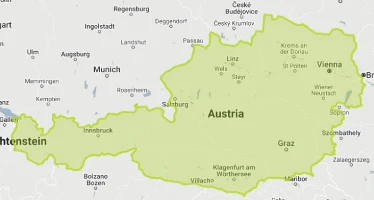
| Austria |  |
83,871 | Former imperial partners, but Austria is 6% roomier despite having 1.6 million fewer residents |
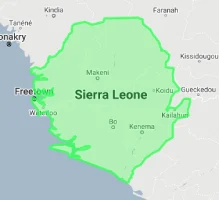
| Sierra Leone | |
71,740 | This West African nation is 9% smaller yet has 2.5 million more inhabitants |
| Scotland |  |
77,933 | Just 1% smaller than Czech Republic but with only half the population and twice the sheep! |
| Bavaria (German state) |  |
70,550 | Germany’s largest state is 11% smaller than its Czech neighbor, yet rivals it in beer production! |
| Lake Michigan (Great Lake) | |
58,030 | The entire Czech Republic could be submerged in this single American lake with 20,000 km² still dry! |
5 Mind-Boggling Size Comparisons That Will Make You Rethink the Czech Republic
- Czech Republic vs. Germany: The David and Goliath of Central Europe
Prepare to be stunned: the Czech Republic (78,867 km²) occupies a mere 22% of Germany’s territory (357,022 km²) – you could fit four and a half Czech Republics inside its larger neighbor! This tiny nation that once lived in Germany’s cultural shadow now outshines it in several categories, producing an astonishing 134 vehicles per 1,000 inhabitants annually (compared to Germany’s 68). Imagine this automotive powerhouse fitting inside Bavaria and Saxony with room to spare, yet manufacturing more cars per capita than the birthplace of Mercedes and BMW! Their shared 819 km border represents a fascinating study in contrasts – on one side, Europe’s economic giant; on the other, a compact cultural superpower that packs more castles, more beer production, and more UNESCO sites per square kilometer than its much larger neighbor.
- Czech Republic vs. United States: A European Powerhouse Lost in America
If you dropped the Czech Republic into the continental United States, you’d need a magnifying glass to find it! This entire European nation would fit into America a staggering 121 times – becoming a barely noticeable speck on the map. Picture the entire Czech Republic – with its 2,000+ castles, 10.7 million citizens, and millennium of history – fitting neatly between New York City and Washington D.C. with room to spare! You could place Prague, Brno, and every Czech town inside just half of Pennsylvania. Despite occupying what Americans would consider merely a “local region,” this miniature nation produces more beer than Texas, contains more historic sites than California, and manufactures more cars per capita than Michigan. Most astonishingly, the Czech Republic has more UNESCO World Heritage sites (14) than 37 U.S. states combined – all packed into a territory smaller than Maine!
- Czech Republic vs. Russia: The Ultimate David vs. Goliath
Brace yourself for the most extreme size contrast imaginable: you could fit the Czech Republic into Russia an almost incomprehensible 216 times! Just Russia’s Sakha Republic alone could swallow 39 Czech Republics within its borders. This size disparity is so dramatic that if the Czech Republic were placed on a map of Russia, it would appear as nothing more than a tiny dot – smaller than many Russian cities. Yet this microscopic nation (by Russian standards) packs an economic punch that exceeds many massive Russian federal subjects combined. The Czech Republic’s $300 billion economy fits into a space 216 times smaller than Russia’s, creating economic output per square kilometer that’s approximately 104 times more concentrated than its eastern neighbor. While Russia stretches across 11 time zones, the Czech clock never changes – you could drive across the entire country in the time it takes to watch “The Lord of the Rings.”
- Czech Republic vs. Texas: Everything’s Bigger in Texas… Especially Compared to Czechia!
You could fit the Czech Republic into Texas a whopping 8.8 times and still have room for another Prague! This size comparison becomes particularly fascinating when you consider the Czech-Texan connection – over 250,000 Texans claim Czech ancestry, with towns like West, Praha, and New Tabor keeping Czech culture alive in the Lone Star State. Imagine the irony: Texas communities proudly maintaining Czech traditions while occupying more land than the entire Czech homeland! The distance from El Paso to Texarkana (greater than 800 miles) is more than 2.5 times the entire length of the Czech Republic. While driving across Texas takes a grueling 12+ hours, you could cross the Czech Republic, enjoy a lengthy brewery tour, visit a castle, and still make it to the other side in less time. Perhaps most impressively, this European nation that could fit between Dallas and Houston produces twice as much beer per capita as Texas and contains more historic castles than the entire United States!
- Czech Republic vs. Africa: A European Speck on the African Giant
Here’s a comparison that will blow your mind: the entire Czech Republic represents just 0.26% of Africa’s vast expanse – you could fit it into the continent a staggering 385 times! This tiny European nation would disappear completely if placed on Africa’s map – Algeria alone could contain over 30 Czech Republics, while the Democratic Republic of Congo could swallow nearly 30. For perspective, Africa’s smallest mainland country (The Gambia) is still 11,295 km² in size – 14% of Czech territory. What makes this comparison truly remarkable is the economic contrast: the Czech Republic’s $300 billion economy emerges from a territory 385 times smaller than Africa’s, representing extraordinary economic density. The Czech Republic generates approximately $3.8 million in GDP per square kilometer compared to Africa’s average of $27,000 – a 141-fold difference in economic output per unit of land. This dramatic contrast visualizes not just size differences but development disparities in their most extreme form.
Europe’s Geographical Bullseye: The Czech Republic’s Extraordinary Location
Despite being a geographical flyweight, the Czech Republic occupies one of the most strategically significant positions on the entire European continent:
The Ultimate European Crossroads
Sitting at Europe’s geographical bullseye, the Czech Republic functions as the continent’s ultimate junction point! This pint-sized nation shares borders with four countries: Germany (819 km), Poland (796 km), Slovakia (252 km), and Austria (276 km) – creating one of Europe’s most connected small states. Prague sits almost exactly at Europe’s geographical center, just 648 km from Brussels, 662 km from Vienna, 517 km from Berlin, and 741 km from Paris. This central position created a natural continental hub that transformed Prague into a major European capital despite the country’s limited size. In fact, the Czech Republic’s position is so central that the actual geographical center of Europe (by some calculations) falls near the town of Kouřim, just 45 km east of Prague!
Europe’s Triple Watershed Marvel
In an astonishing geographical quirk, this tiny nation serves as Europe’s triple watershed! While most countries drain to one or maybe two seas, the Czech Republic’s waters flow to THREE different marine basins: the Elbe (Labe) and Vltava rivers travel 1,094 km to the North Sea, the Oder (Odra) journeys 854 km to the Baltic Sea, and the Morava river connects to the Black Sea via the Danube – a 2,857 km epic voyage! This triple-drainage system gives this postage-stamp-sized country disproportionate influence over Europe’s watershed management, affecting water quality for hundreds of millions of Europeans downstream. The most remarkable point occurs near the village of Kořenov, where three raindrops falling just centimeters apart could end up in three different seas, thousands of kilometers from each other!
The Natural Fortress of Europe
The Czech Republic sits atop the Bohemian Massif – a 300-million-year-old geological fortress that forms the country’s natural protective bowl! This ancient crystalline block creates a remarkable fortress-like topography with mountain ranges forming a protective ring around the central Bohemian plateau: the Sudetes (with peaks up to 1,603m) to the northeast, the Ore Mountains (1,244m) to the northwest, the Bohemian Forest (1,456m) to the southwest, and Carpathian foothills to the southeast. This geographical “castle” protected Czech cultural development through centuries of European turbulence while simultaneously creating natural mountain passes that funneled trade routes through the region. The effect is dramatic: the Czech Republic essentially forms a mountainous bridge between the North European Plain and the Danube Basin – a continental connector in miniature!
Where Three European Worlds Collide
This tiny territory sits precisely where Germanic, Slavic, and formerly Hungarian cultural spheres crash together – creating Europe’s most fascinating cultural laboratory! Acting as Europe’s ultimate transition zone, the Czech Republic developed a unique fusion civilization where Western, Eastern and Southern European traditions blend in ways impossible elsewhere. Evidence appears everywhere: Prague’s architecture showcases Germanic Gothic spires alongside Slavic-influenced Baroque domes; Czech cuisine combines Germanic schnitzels and dumplings with Slavic soups and Hungarian-influenced goulash; the Czech language itself uses Latin script (Western) to write a Slavic language (Eastern), peppered with German loanwords. This cultural crossroads position enabled Prague to develop as a continental powerhouse of creativity, producing Dvořák’s symphonies, Kafka’s literature, Mucha’s Art Nouveau, and Kundera’s novels – contributions to European culture vastly exceeding what anyone would expect from a nation smaller than Maine!
Pocket-Sized Paradise: The Czech Republic’s Astonishing Landscape Diversity
How does a country smaller than South Carolina pack in such breathtaking geographical variety? Let’s explore the Czech Republic’s remarkably diverse terrain that defies its compact dimensions:
- Europe’s Perfect Natural Fortress: Like a geological miracle, approximately 67% of the Czech Republic consists of highlands and low mountains arranged in a perfect protective bowl! This miniature nation is encircled by natural ramparts: the jagged Ore Mountains (Krušné hory) to the northwest, the craggy Sudetes with the country’s highest peak Sněžka (1,603m) to the northeast, the rolling Bohemian-Moravian Highlands in the center, and Carpathian foothills to the southeast. This mountain ring creates a sheltered interior basin with Prague nestled at its heart – a geographical configuration that protected Czech culture through centuries of European conflicts. Stand at the Elbe River’s lowest point (115m) and look up at Sněžka’s summit (1,603m), and you’ll witness a vertical range that rivals much larger nations – all compressed into a territory smaller than Maine! This dramatic elevation change creates seven distinct climate zones within a country you could drive across in a morning.
- A Tale of Two Mini-Regions: Despite its pocket-sized dimensions, the Czech Republic contains two dramatically different geographical worlds! The diamond-shaped nation splits into Bohemia in the west (a self-contained mountain-ringed basin) and Moravia-Silesia in the east (rolling hills opening to the Danube plains), divided by the Bohemian-Moravian Highlands running right down the middle. This geographical split created fascinating cultural divergence: Bohemia absorbed Germanic influences from the west, while Moravia developed stronger connections with Slovak, Polish and Hungarian traditions from the east. The contrast appears in everything from architecture to dialect – Bohemia features more Gothic and Renaissance styles with a harder-sounding Czech accent, while Moravia showcases more Baroque buildings and softer pronunciation. Just a three-hour drive takes you between these contrasting worlds that developed like geographical siblings with distinct personalities!
- Middle Earth in Miniature – The Stone Cities: Hidden within this tiny country lie otherworldly sandstone wonderlands that seem plucked from fantasy novels! The mind-bending rock formations of Bohemian Switzerland (České Švýcarsko) and Bohemian Paradise (Český ráj) create natural “stone cities” with towers, arches, and canyons that inspired fantasy filmmakers worldwide. The Pravčická Brána stands as Europe’s largest natural sandstone arch (26.5m span) – a geological masterpiece taller than a seven-story building yet delicate enough that walking on it is now forbidden. Most spectacular are the Adršpach-Teplice Rocks, where 600+ sandstone towers soar up to 90 meters high, connected by labyrinthine passages that narrow to just 60cm wide. These dramatic formations pack more geological wonders per square kilometer than most countries have in regions ten times larger – all within a nation smaller than West Virginia!
- The Miniature Water Wonderland: This compact nation holds enough water features to shame countries twice its size! The Czech Republic’s aquatic abundance includes an astounding 25,000+ kilometers of rivers and streams (enough to circle the Earth’s equator!) packed into just 78,867 square kilometers, plus approximately 24,000 ponds and 100+ major reservoirs. Most remarkably, Western Bohemia’s legendary spa triangle (Karlovy Vary, Mariánské Lázně, and Františkovy Lázně) contains over 300 mineral springs in an area smaller than Rhode Island – with Karlovy Vary alone featuring 15 major thermal springs within just 1.5 square kilometers! These springs, reaching temperatures up to 73°C (163°F) and containing 40+ minerals, create some of Europe’s most concentrated healing waters. The country’s hydrological density is so impressive that the average Czech citizen lives within 3 kilometers of a significant water feature – creating one of Europe’s most water-rich environments in one of its smaller nations!
- The Underground Czech Republic – Bigger Below Than Above?: While tiny on the surface, this nation expands dramatically underground with over 4,000 documented caves creating a subterranean realm almost as vast as its above-ground territory! The Moravian Karst alone features over 1,100 caves within just 92 square kilometers, including the haunting Macocha Abyss – a 138-meter-deep sinkhole large enough to swallow an entire office building. The Punkva Caves contain Europe’s largest underground riverine canyon, while the mind-boggling Hranice Abyss has been confirmed as the world’s deepest underwater cave at 404 meters deep (with robots still unable to reach its bottom, estimated at 1,000+ meters)! These extraordinary underground features essentially double the Czech Republic’s effective territory by adding a vertical dimension, creating a nation that expands downward as much as it stretches horizontally. In a country where space is at a premium, the Czechs have discovered an entire kingdom beneath their feet – making this small nation exponentially larger than it appears on maps!
Czech Republic’s Regions: Administrative Geography
The Czech Republic is divided into 14 administrative regions (kraje), each with its own distinctive character:
| Czech Region | Area (km²) | Comparable To | Capital |
|---|---|---|---|
| Central Bohemian Region (largest region) |
11,015 | Similar to Lebanon (10,452 km²) | Prague (separate region) |
| South Bohemian Region | 10,058 | Similar to Kosovo (10,887 km²) | České Budějovice |
| Plzeň Region | 7,561 | Similar to Fiji (7,055 km²) | Plzeň |
| Vysočina Region | 6,796 | Slightly larger than Delaware (6,446 km²) | Jihlava |
| Moravian-Silesian Region | 5,427 | Similar to Trinidad and Tobago (5,130 km²) | Ostrava |
| Prague (smallest region) |
496 | Similar to Andorra (468 km²) | Prague |
| Karlovy Vary Region (westernmost region) |
3,314 | Similar to Luxembourg (2,586 km²) | Karlovy Vary |
Explore More Size Comparisons
Curious about how other major countries and regions compare in true size? Check out these related articles:
- Real Size Of Austria: Alpine Nation Smaller Than Maine Yet Contains The Largest Underground Lake in Europe
- Real Size Of Poland: Central European Nation With More Lakes Than Finland
- Real Size Of Slovakia: Small Carpathian Nation With The Highest Concentration of Castles Per Capita
- Real Size Of Germany: Central European Power’s True Dimensions
- Complete List of Countries by True Size
Sources & Further Reading
- Czech Statistical Office. (2025). Geographical and National Statistics.
- Czech Tourism Authority. (2024). Czech Geographic Information.
- Ministry of Environment of the Czech Republic. (2024). Environmental Data of the Czech Republic.
- CIA World Factbook. (2024). Czechia.