Poland
World Rank: #69
312,696 km² (120,733 sq mi)


Next Larger Country
(Rank #68)
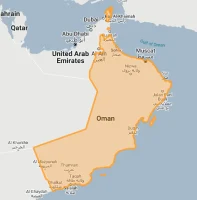
Oman
309,500 km² (119,500 sq mi)

Poland: Europe’s Geographical Giant Hiding in Plain Sight
Did you know you could fit the entire United Kingdom inside Poland with room to spare for Belgium? Or that it would take you longer to drive across Poland than to travel from London to Paris?
Welcome to the startling reality of Poland — a country that’s 129% the size of the United Kingdom yet consistently ranks among Europe’s most size-underestimated nations. At 312,696 square kilometers (120,733 square miles), Poland ranks 69th globally but packs a territorial punch that would surprise most Western Europeans.
Throughout this article, we’ll drag Poland across the map to reveal how this Central European powerhouse truly measures up. Despite its substantial dimensions, Poland suffers from a persistent “size perception gap” that stems from historical, political, and cartographic factors rather than reality.
Positioned between 49°N and 54.5°N latitude, Poland occupies a central position in Europe that’s approximately the same latitude as northern Germany and southern England. Unlike Scandinavian countries that appear massively distorted on maps, Poland’s misconception comes from cultural and educational biases more than projection issues.
With its roughly square shape and substantial east-west width of 689 kilometers (428 miles), Poland is spacious enough that a drive from Świnoujście in the northwest to Przemyśl in the southeast spans roughly 997 kilometers (619 miles) – equivalent to driving from London to Edinburgh and back to Newcastle!
Ready to have your geographical assumptions challenged? Let’s discover just how massive Poland truly is (video with our interactive map that adjusts for Mercator projection distortion):
Watch how Poland compares when overlaid on other countries. We’ve moved it across the USA, UK, Japan, and many other nations to reveal its true proportions. You can use this country size comparison interactive map here.
7 Mind-Blowing Poland Size Facts
- Poland covers 312,696 km² – enough area to fit 129 Rhode Islands inside its borders
- Poland is larger than Italy, the UK, and Greece combined if you exclude their island territories
- Poland’s territory is 3.5 times the size of South Korea, despite having 25% fewer people
- If placed in the United States, Poland would be the 5th largest state, larger than New Mexico but slightly smaller than Montana
- Poland has a longer coastline (440 km) than Croatia (mainland only), Lebanon, and Singapore combined
- Poland contains over 9,300 lakes larger than 1 hectare – more lakes than Germany, France, and Spain combined
- Poland’s forests cover 9.2 million hectares – an area larger than the entire country of Hungary
Poland’s True Size in Global Perspective
To appreciate Poland’s actual dimensions, these direct comparisons with familiar regions offer eye-opening context:

Poland vs. United Kingdom: Poland is approximately 29% larger than the entire UK, challenging many Europeans’ mental geography
| Comparison | Flag | Area (km²) | Size Relative to Poland |
|---|---|---|---|
| Poland | |
312,696 | 1.0 |
| Italy |  |
301,340 | 0.96 times Poland’s size |
| United Kingdom |  |
242,495 | 0.78 times Poland’s size |
| New Mexico (US state) |  |
314,917 | 1.01 times Poland’s size |
| Philippines |  |
300,000 | 0.96 times Poland’s size |
| Malaysia (Peninsular only) |  |
132,265 | 0.42 times Poland’s size |
| Ecuador |  |
283,561 | 0.91 times Poland’s size |
7 Astonishing Poland Size Comparisons
- Poland vs. Germany: Poland covers 312,696 km² compared to Germany’s 357,022 km², making it 87% the size of its influential western neighbor. Despite this modest difference, Germany’s economy is over 6 times larger and receives significantly more global attention.

- Poland vs. American States: Poland is nearly identical in size to New Mexico (314,917 km²), larger than Nevada (286,380 km²), and would rank as America’s 5th largest state. Placed in the eastern US, Poland would stretch from New York City to Chicago with room to spare.

- Poland vs. Italy: Poland exceeds Italy’s mainland territory (301,340 km²) by about 11,356 km² – an area roughly the size of Jamaica. Despite Italy’s global prominence in culture, cuisine, and tourism, Poland actually encompasses more territory.

- Poland vs. United Kingdom: Poland dwarfs the United Kingdom (242,495 km²) by over 70,000 km² – an area larger than the entire nation of Ireland. You could fit all of England, Wales, and Northern Ireland inside Poland with room to spare for several small European countries.
- Poland vs. Japan: Despite Japan’s massive global economic and cultural influence, mainland Poland is only 21% smaller than Japan’s four main islands (377,976 km²). However, Japan packs 126 million people into its territory compared to Poland’s 38 million.

- Poland vs. Russia:

- Poland vs. Africa:

The Great Polish Perception Gap: Why Poland’s Size Is Consistently Underestimated
Several fascinating factors contribute to the widespread misconception about Poland’s true dimensions:
The Historical Accordion Effect
Poland’s borders have dramatically expanded and contracted throughout history, with the country completely vanishing from maps between 1795-1918 during its partition. When it reemerged after World War I, its territory shifted significantly westward after World War II. This “territorial accordion” effect has made it difficult for the world to form a stable mental image of Poland’s size and location.
The Cold War Shadow
Decades behind the Iron Curtain rendered Poland somewhat invisible to Western consciousness. During this period, Western European educational systems and media diminished Poland’s importance and size, creating perceptions that persist today. Many Europeans educated during the Cold War formed mental maps that minimized Eastern European countries.
The Economic Disparity Effect
Poland’s GDP ($679 billion) remains significantly smaller than comparably-sized Western European nations like Italy ($2.1 trillion). This economic disparity creates a cognitive bias where people subconsciously equate economic footprint with physical size, assuming Poland must be smaller than its wealthier neighbors.
The Shape Psychology
Poland’s relatively compact, four-sided shape lacks distinctive peninsulas or islands that make countries like Italy, Greece, or Norway visually memorable on maps. This less distinctive outline makes Poland “blend in” on European maps, reducing its perceived significance and size in the mental geography of many people.
Poland’s Geographic Diversity: A Land of Surprising Contrasts
Poland’s landscape contains remarkable diversity within its substantial borders:
- The Baltic Coast: Poland’s 440-kilometer (273-mile) Baltic coastline features some of Europe’s most pristine beaches and dramatic dunes. At Słowiński National Park, massive shifting sand dunes reach heights of up to 42 meters (138 feet) – among the tallest active dunes in Europe. These “Polish deserts” move up to 10 meters annually, gradually burying forests in their path.
- Lake Country Paradise: Poland contains an astonishing 9,300 lakes larger than 1 hectare – more than Finland in absolute numbers. The Masurian Lake District alone comprises over 2,000 lakes connected by rivers and canals, creating one of Europe’s largest inland waterway networks spanning 52,000 hectares. Lake Śniardwy, Poland’s largest, covers 113.8 km² – large enough to fit the entire country of Vatican City 284 times over.
- Europe’s Last Primeval Forest: Białowieża Forest represents the last substantial fragment of the primeval forest that once covered the European Plain. This UNESCO World Heritage site has remained largely unchanged for nearly 8,000 years and harbors Europe’s largest land mammal – the European bison (żubr). These majestic creatures, standing 2 meters tall and weighing up to 920 kg, were saved from extinction in Poland and now number over 2,000 in the wild.
- Alpine Peaks: The Tatra Mountains along Poland’s southern border reach alpine heights of up to 2,499 meters (8,199 feet) at Mount Rysy, creating dramatically varied ecosystems within a relatively compact area. These mountains pack remarkable biodiversity into just 785 km² of Polish territory, hosting more plant species than the entire British Isles despite covering just 0.25% of Poland’s total area.
- Salt Cathedral Marvel: The Wieliczka Salt Mine near Kraków descends to depths of 327 meters (1,073 feet) and contains over 287 kilometers (178 miles) of tunnels – equivalent to the distance between Warsaw and Lodz. Active since the 13th century, its underground chambers include a cathedral carved entirely from salt rock in which everything – from chandeliers to altarpieces – is made from salt crystals.
Poland’s Strategic Position: The European Crossroads
Poland’s substantial territorial footprint occupies a pivotal position in Europe:
- Poland shares a 3,511-kilometer (2,182-mile) land border with seven different countries: Germany (467 km), Czech Republic (796 km), Slovakia (541 km), Ukraine (535 km), Belarus (418 km), Lithuania (104 km), and Russia’s Kaliningrad exclave (210 km). This makes Poland one of the most internationally connected nations in Europe.
- The geographical center of Europe (calculated by several different methodologies) falls either within or very near Poland’s territory, with the most widely accepted measurement placing it near the Polish town of Suchowola. This central position has made Poland a crucial transit country, with four major European transport corridors intersecting its territory.
- Poland’s substantial Baltic coastline provides strategic access to Northern Europe, with major ports at Gdańsk, Gdynia, and Szczecin handling over 100 million tons of cargo annually – approximately equivalent to the entire annual cargo volume of Portugal.
- As the easternmost large EU member state, Poland forms 1,163 kilometers (723 miles) of the European Union’s eastern border – roughly 38% of the EU’s entire land border with non-EU Eastern European countries.
- The country’s varied topography creates natural corridors between Eastern and Western Europe, particularly through the Polish Plains – historically known as the “Gateway to Europe” – which have served as major trade and military routes throughout European history.
Population Patterns: Europe’s Sixth Most Populous Nation
Poland’s 38 million inhabitants are distributed across its substantial territory in distinctive patterns:
- With approximately 38 million inhabitants, Poland is the sixth most populous country in the European Union, containing roughly 8.5% of the entire EU population – more than the Netherlands, Belgium, Greece, and Sweden combined.
- Unlike many European countries dominated by a single metropolitan area, Poland features an unusually balanced urban network. While Warsaw (1.8 million) is the largest city, the country has five other cities with populations over 500,000 and an additional 11 cities with populations between 200,000-500,000, creating multiple strong regional centers.
- Poland maintains a moderate population density of 122 people per square kilometer (316 per square mile) – less crowded than Germany (232/km²) or the United Kingdom (281/km²) but more densely populated than Spain (93/km²) or Sweden (25/km²).
- The country has experienced one of Europe’s largest peacetime demographic shifts since joining the EU in 2004, with an estimated 2 million Poles currently living abroad – equivalent to the entire population of Slovenia. The UK alone hosts approximately 800,000 Polish citizens.
- Despite its size and central location, Poland has maintained remarkable ethnic homogeneity, with over 97% of residents identifying as ethnically Polish – making it one of Europe’s most ethnically uniform large nations. This homogeneity stands in stark contrast to comparably sized European countries like Spain (with substantial Catalan and Basque populations) or the UK (with its diverse ethnic makeup).
Poland’s Voivodeships: 16 Distinct Regions
Poland is divided into 16 voivodeships (provinces), many of which are larger than entire European countries:
| Polish Voivodeship | Area (km²) | Comparable To | Major City |
|---|---|---|---|
| Masovian (largest voivodeship) |
35,558 | Larger than Belgium (30,528 km²) | Warsaw |
| Greater Poland | 29,826 | Larger than Albania (28,748 km²) | Poznań |
| Lublin | 25,122 | Larger than Macedonia (25,713 km²) | Lublin |
| Lower Silesian | 19,947 | Nearly the size of Slovenia (20,273 km²) | Wrocław |
| Podlaskie | 20,187 | Larger than Israel (20,770 km²) | Białystok |
| Silesian (most densely populated) |
12,333 | Larger than Lebanon (10,452 km²) | Katowice |
| Opole (smallest voivodeship) |
9,412 | Similar to Cyprus (9,251 km²) | Opole |
Economic Influence: A Quiet European Powerhouse
Poland’s substantial physical size is increasingly matched by growing economic clout:
- Poland boasts the 21st largest economy globally and the 6th largest in the European Union, with a GDP of $679 billion that exceeds oil-rich countries like Norway and Thailand.
- The country ranks as the EU’s 3rd largest agricultural producer, cultivating nearly 14 million hectares of agricultural land – an area larger than the entire nation of Greece. Poland leads Europe in apple production (4.3 million tonnes annually), making it the world’s 3rd largest apple producer behind only China and the United States.
- Poland’s industrial base spread across its substantial territory includes Europe’s largest furniture manufacturing sector ($13.6 billion in exports annually), one of the continent’s largest automotive parts industries, and significant aerospace, electronics, and chemical production.
- The country’s extensive geography has facilitated the development of impressive transportation infrastructure, including 4,200 kilometers of highways/expressways, 19,400 kilometers of railway lines, and 15 commercial airports – positioning Poland as a crucial logistics hub between Western Europe and Asia.
- Poland’s size and central location have attracted massive foreign direct investment, with over 65,000 companies with foreign capital operating across its territory – including major manufacturing facilities from Volkswagen, LG, Toyota, Dell, and Amazon that utilize Poland’s substantial labor force and strategic position.
Natural Resources: A Land of Hidden Wealth
Poland’s expansive territory contains diverse and valuable natural resources:
- Coal Reserves: Poland possesses Europe’s largest hard coal reserves (estimated at 23 billion tons) and substantial brown coal (lignite) deposits, which have powered its industrial development but now present environmental challenges in the transition to renewable energy.
- Copper and Silver: The Lower Silesian region contains one of Europe’s richest copper deposits, with Poland ranking as the 9th largest copper producer worldwide and the 2nd largest silver producer in Europe. The Lubin-Głogów Copper District alone contains an estimated 1.8 billion tons of copper ore.
- Amber Treasures: Poland’s Baltic coast contains the world’s largest deposits of Baltic amber – fossilized tree resin dating back 44 million years. Over 90% of the world’s amber deposits are found along this coastline, with Poland producing about 15 tons of this “gold of the North” annually.
- Forest Resources: Poland’s forests cover approximately 30% of the country’s area (9.2 million hectares), supporting a substantial timber industry that makes Poland Europe’s 4th largest furniture exporter with annual exports exceeding $13 billion.
- Agricultural Bounty: The country’s fertile land – particularly the black earth regions in the southeast – supports extraordinary agricultural productivity, with Poland ranking as the EU’s 3rd largest agricultural producer, 7th largest milk producer globally, and Europe’s largest producer of apples, carrots, and currants.
Geographic Challenges: Natural and Geopolitical
Poland’s position and terrain create distinctive challenges:
- The Geopolitical Dilemma: Poland’s location on the North European Plain – with few natural barriers on either its eastern or western borders – has created a persistent “Polish dilemma” throughout history. This flat terrain has made Poland a natural invasion corridor, contributing to the country being partitioned and occupied multiple times throughout its history.
- Flood Vulnerability: Poland’s major river systems, particularly the Oder and Vistula, create substantial flood risks, with the catastrophic floods of 1997 causing over $4.5 billion in damage. Climate change is increasing the frequency and severity of both flood and drought events across the country’s considerable area.
- Energy Transition: The country faces significant challenges in transitioning from its traditional coal-based energy system (which still provides approximately 70% of electricity) to cleaner alternatives. This transition is particularly challenging given Poland’s substantial industrial base and 40 million inhabitants requiring reliable energy sources.
- Regional Disparities: Despite being a unitary state, Poland shows significant economic disparities between its western and eastern regions – a division historically known as “Poland A and B.” The easternmost voivodeships have GDP per capita levels approximately 40% lower than those in the western regions.
- Demographic Challenges: Poland faces one of Europe’s most rapid demographic shifts, with the fertility rate falling to 1.42 children per woman – well below the replacement rate of 2.1 – creating substantial challenges for a country with such a large territory and significant infrastructure to maintain.
Explore More Size Comparisons
Curious about how other major countries and regions compare in true size? Check out these related articles:
- The True Size of Germany: Central European Power’s Real Dimensions
- The Real Size of Italy: Mediterranean Peninsula’s Actual Proportions
- The Real Size of Ukraine: Eastern Europe’s Largest Country
- The True Size of United Kingdom: Island Nation’s Compact Dimensions
- Complete List of Countries by True Size
Sources & Further Reading
- Central Statistical Office of Poland. (2024). Geographical Information and National Statistics.
- Polish Geographical Society. (2023). Topographical Survey of Poland.
- Ministry of Foreign Affairs Poland. (2024). Physical Geography of Poland.
- CIA World Factbook. (2024). Poland.