World Rank: #126
51,197 km² (19,767 sq mi)

Next Smaller Country
(Rank #127)
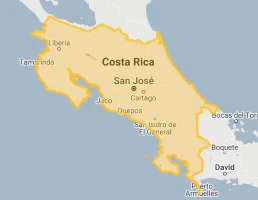
Costa Rica
51,100 km² (19,730 sq mi)
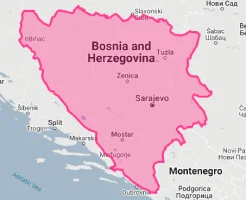
Bosnia and Herzegovina: The Heart-Shaped Mountain Nation Almost Surrounded by Croatia
Did you know Bosnia and Herzegovina, smaller than West Virginia, contains one of Europe’s last primeval forests? This compact Balkan nation packs extraordinary geographical diversity into just 51,197 square kilometers (19,767 square miles) – a territory smaller than 39 of the 50 U.S. states.
Like other countries far from the equator, Bosnia and Herzegovina appears distorted on standard world maps. The commonly used Mercator projection exaggerates the size of countries in northern latitudes, making this already small nation look different in various global contexts.
When viewed on a typical Mercator map, Bosnia and Herzegovina’s distinctive heart-like shape may seem larger than its true dimensions. In reality, this mountainous country could fit into Algeria 47 times or Russia 334 times! Our interactive tool corrects this distortion, letting you see Bosnia and Herzegovina’s actual size as you drag it across the globe:
Watch Bosnia and Herzegovina’s true dimensions revealed! See how this mountainous Balkan nation compares when dragged across different continents using our interactive mapping tool that corrects for Mercator distortion.
7 Surprising Bosnia and Herzegovina Size Facts
- Bosnia and Herzegovina is 334 times smaller than Russia yet has more mountains per square kilometer
- With just 51,197 km², it’s smaller than West Virginia (62,259 km²) yet contains Europe’s last jungle (Perućica Forest)
- Bosnia and Herzegovina would fit into Texas nearly 13.5 times, yet has more river canyons
- It has only 20 km of coastline – the shortest of any coastal country in the world except Monaco
- Despite its small size, Bosnia and Herzegovina contains 60% of Europe’s remaining old-growth forests
- You can drive across the entire country in just 5 hours (290 km/180 mi)
- Bosnia and Herzegovina is almost completely surrounded by Croatia, which wraps around 77% of its border
Bosnia and Herzegovina Among Its Balkan Neighbors
Bosnia and Herzegovina occupies a unique position in the heart of the Western Balkans:

Bosnia and Herzegovina (highlighted in red) compared to countries of the former Yugoslavia. It occupied 20% of Yugoslavia’s territory but contains 75% of its mountain ranges!
Size Twins: Countries and States Similar to Bosnia and Herzegovina
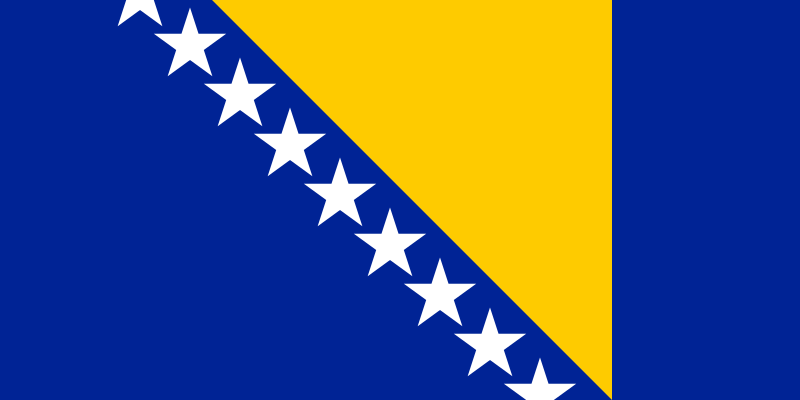
| Size Comparison | Flag | Area (km²) | How It Compares |
|---|---|---|---|
| Bosnia and Herzegovina | |
51,197 | Our Balkan baseline |
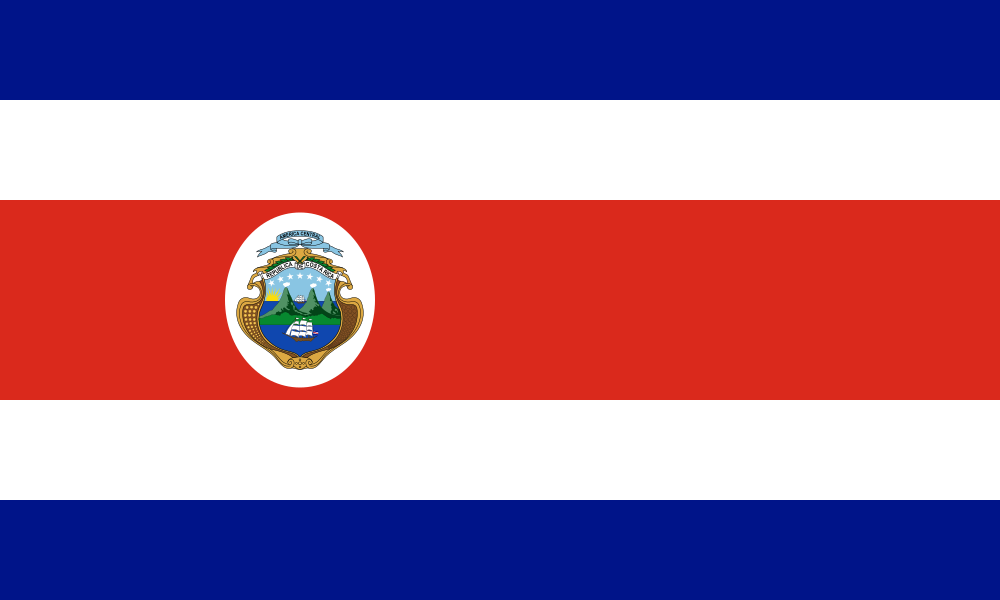
| Costa Rica | |
51,100 | Almost identical in size with similar mountain-dominated terrain |
| Slovakia | 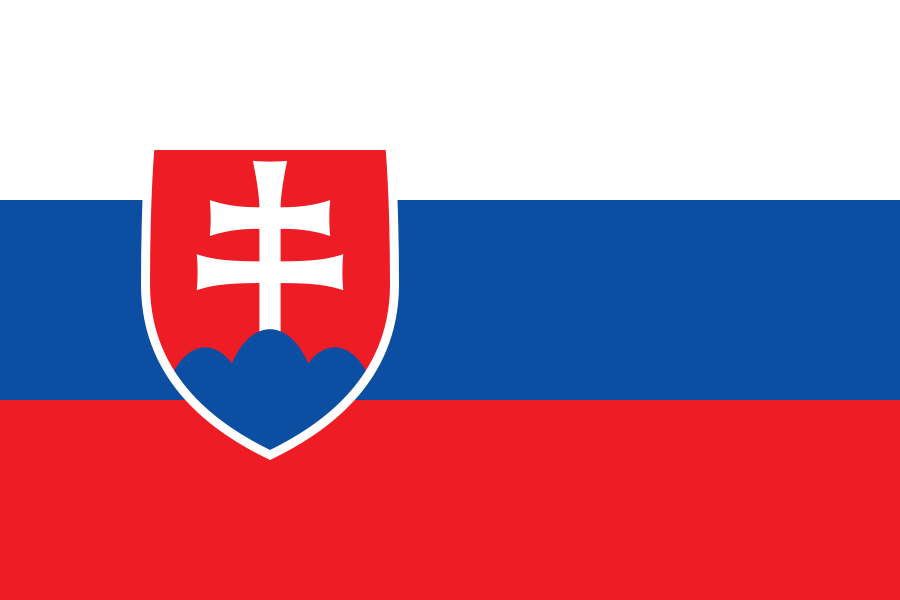 |
49,035 | 4% smaller with similar mountainous landscape |
| Nova Scotia (Canadian province) |  |
55,284 | 8% larger than Bosnia and Herzegovina |
| Croatia |  |
56,594 | 11% larger yet wraps around Bosnia’s borders |
| Delaware + Maryland + New Jersey (US states) |  |
52,249 | 2% larger than Bosnia and Herzegovina combined |
| Dominican Republic | 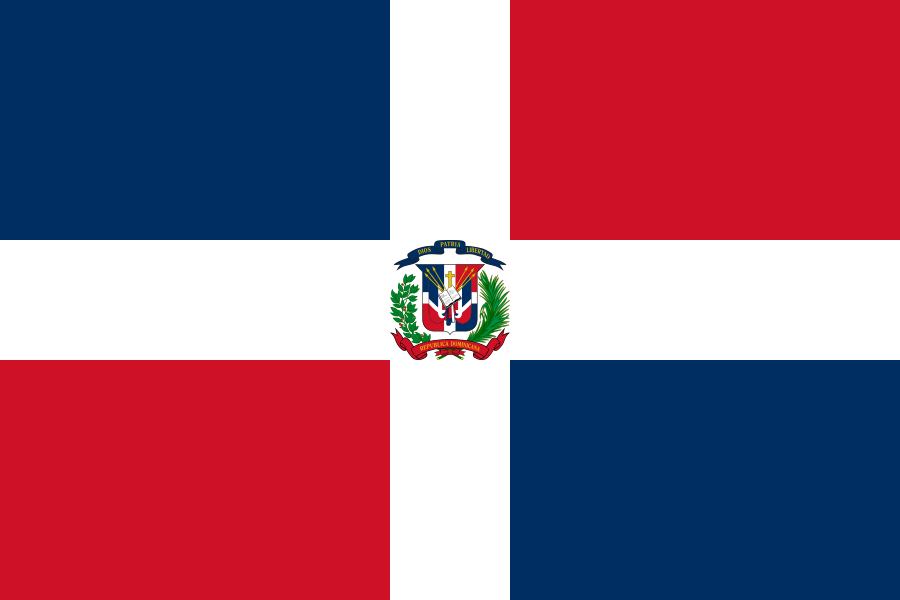 |
48,671 | 5% smaller than Bosnia and Herzegovina |
Bosnia and Herzegovina vs. Russia: The Mountain Minnow and the Global Giant
Bosnia and Herzegovina would fit into Russia an astonishing 334 times! When overlaid on Russia’s vast territory, this Balkan nation is barely visible – smaller than many Russian cities.
Russia’s Krasnoyarsk Krai region alone (2,339,700 km²) could contain 45 Bosnia and Herzegovinas with room to spare. Yet despite this enormous size difference, Bosnia and Herzegovina has more mountains per square kilometer than its giant neighbor.
The average elevation in Bosnia and Herzegovina (500m) is higher than Russia’s (228m) despite Russia having the world’s highest non-Asian peaks in the Caucasus Mountains.
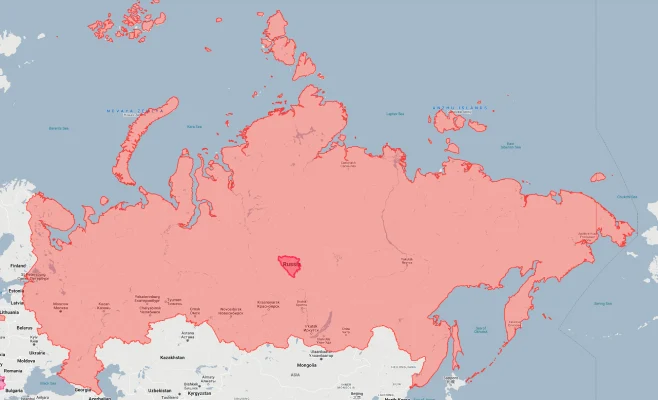
Bosnia and Herzegovina (highlighted in red) would fit into Russia 334 times! This shows how dramatically Mercator projection distorts our perception of size.
Bosnia and Herzegovina vs. United States: A Balkan Speck in America
Bosnia and Herzegovina would fit into the continental United States approximately 187 times. It’s smaller than 39 of the 50 U.S. states, with a size comparable to combining Massachusetts, Connecticut, and Rhode Island.
If placed over the eastern United States, Bosnia and Herzegovina would barely stretch from Washington D.C. to Richmond, Virginia – yet this modest territory contains some of Europe’s most dramatic mountain landscapes.
Despite being much smaller than many U.S. states, Bosnia and Herzegovina has over 8,000 documented caves and pits – more than Kentucky, Tennessee, and Virginia (America’s cave states) combined.

Bosnia and Herzegovina overlaid on the eastern United States – it would barely stretch from Washington D.C. to Richmond, Virginia.
Bosnia’s Unique Shape and Geographic Features
Bosnia and Herzegovina’s territory is defined by its distinctive shape and dramatic topography:
- The Heart-Shaped Nation: Bosnia and Herzegovina’s borders form a distinctive heart-like shape, with Croatia wrapping around it on three sides. This unusual configuration gives the country a maximum north-south distance of 325 kilometers (202 miles) and an east-west width of 287 kilometers (178 miles).
- Almost Landlocked: Despite technically being a coastal country, Bosnia and Herzegovina has just 20 kilometers (12.4 miles) of Adriatic coastline near the town of Neum – the second-shortest coastline of any coastal nation after Monaco. This small window to the sea is sandwiched between two parts of Croatia’s territory.
- The Mountain Maze: Over 90% of Bosnia and Herzegovina is mountainous or hilly, with an average elevation of around 500 meters (1,640 feet) above sea level. The Dinaric Alps run through the country, with the highest peak being Maglić at 2,386 meters (7,828 feet) on the border with Montenegro.
- The Divided Nation: Bosnia and Herzegovina’s modest territory is politically divided into two entities: the Federation of Bosnia and Herzegovina (26,110 km²) and Republika Srpska (24,857 km²), plus the small Brčko District (493 km²). Despite this internal division, the entire country would fit inside New York state twice.
Bosnia and Herzegovina’s Natural Regions
Despite its compact size, Bosnia and Herzegovina contains four distinct geographical regions:
| Region | Area (km²) | Similar Size To | Geographic Character |
|---|---|---|---|
| Dinaric Alps | ~28,000 | Albania | Central mountainous region with dramatic karst landscapes, caves, and forests |
| Pannonian Basin | ~5,000 | Trinidad | Northern plains region along the Sava River with fertile farmland |
| Adriatic Basin | ~5,500 | Brunei | Mediterranean climate zone with the tiny coastal stretch at Neum |
| Peripannonian Region | ~12,700 | Montenegro | Transitional hills between the mountains and northern plains |
5 Natural Wonders Packed into Bosnia and Herzegovina’s Small Territory
1. Perućica: Europe’s Last Jungle
Deep within Sutjeska National Park lies Perućica, one of Europe’s last remaining primeval forests – a 1,400-hectare wilderness untouched by human hands for over 20,000 years.
This ancient ecosystem contains trees over 300 years old reaching heights of 50 meters (164 feet), including an extraordinary black pine tree measuring 3.5 meters in diameter – among Europe’s oldest living organisms.
2. The Dinaric Karst Wonderland
Bosnia and Herzegovina contains some of Europe’s most spectacular karst (limestone) topography, with over 8,000 documented caves, pits, and sinkholes.
The most impressive is the Vjetrenica Cave system with 7.5 kilometers of passages, home to over 200 species including the olm – a blind salamander that can live up to 100 years and survive a decade without food.
3. The Neretva Canyon
Cutting through the heart of the country, the emerald-green Neretva River has carved a spectacular canyon up to 1,200 meters (3,937 feet) deep in places – one of Europe’s deepest river gorges.
This dramatic landscape transitions from alpine to Mediterranean ecosystems within just 225 kilometers, creating one of Europe’s most ecologically diverse river systems within this small nation.
4. The Pyramid Mountains
Near the town of Visoko stand the distinctive triangular mountains claimed by some to be the world’s largest and oldest pyramids, though geologists maintain they are natural formations.
Whether natural or artificial, these striking triangular hills create some of Europe’s most unusual landforms, with the “Pyramid of the Sun” rising to 220 meters (720 feet) – higher than Egypt’s Great Pyramid.
5. Una National Park
Along the northwestern border with Croatia, the Una River creates a spectacular series of waterfalls, rapids, and turquoise pools within deep forest canyons.
The park contains the 25-meter (82-foot) high Štrbački Buk waterfall – a multi-tiered cascade that spans the entire 60-meter width of the river, creating one of Europe’s most impressive freshwater features.
Explore More Size Comparisons
Curious about how other countries compare in true size? Check out these related articles:
- Real Size Of Croatia: Coastal Gem With More Islands Than Days in a Year in a Territory Smaller Than West Virginia
- Real Size Of Serbia: Balkan Nation With Europe’s Largest River Gorge in a Territory Smaller Than Indiana
- Real Size Of Slovenia: The Alpine Gem Smaller Than New Jersey Yet With Mountains, Caves, and Coastline
- Real Size Of Montenegro: Tiny Balkan Nation With Europe’s Deepest Canyon in an Area Smaller Than Connecticut
- Complete List of Countries by True Size