Slovenia
World Rank: #151
20,273 km²
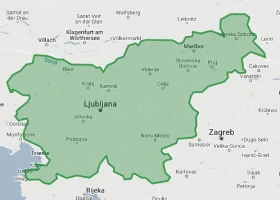

Next Larger Country
(Rank #150)
El Salvador
21,041 km²
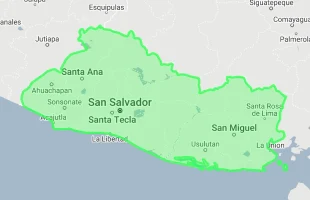
Next Smaller Country
(Rank #152)
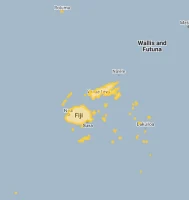
Fiji
18,274 km²
Slovenia: Alpine Gem at the Crossroads of Europe
Slovenia ranks as the 151st largest country in the world with a territory of 20,273 square kilometers (7,827 square miles). Nestled at the junction of four major European geographical regions – the Alps, the Dinaric Alps, the Pannonian Plain, and the Mediterranean – Slovenia is bordered by Italy, Austria, Hungary, and Croatia, occupying a strategic position at the crossroads of Central and Southeastern Europe.
What makes Slovenia geographically remarkable is its extraordinary diversity in such a small package. This compact nation packs impressive topographical, climatic, and cultural variety into an area roughly the size of New Jersey or Wales.
Located between latitudes 45° and 47° North, Slovenia experiences minimal distortion on standard Mercator projection maps. The common perception of Slovenia’s size is generally accurate, with its position in Central Europe making it appear proportionally correct on most maps.
Let’s explore how Slovenia’s true size compares to other regions and what makes this small but varied country geographically unique despite its modest dimensions. Here is a video created with our interactive map that adjusts for Mercator projection distortion and gives you the true size of Slovenia:
Watch Slovenia shrink to its actual size as we move it toward the equator. We compare it to the USA, Europe, Africa, Greenland, Brazil, Australia, Russia, India, China, etc. You can use this country size comparison interactive map here.
Slovenia’s True Size in Global Perspective
To better understand Slovenia’s dimensions, direct comparisons with other regions provide valuable context:

Slovenia vs. US States: Slovenia is similar in size to New Jersey and about 1/19 the size of California
| Comparison | Flag | Area (km²) | Size Relative to Slovenia |
|---|---|---|---|
| Slovenia | |
20,273 | 1.0 |
| Austria |  |
83,879 | 4.14 times Slovenia’s size |
| Croatia |  |
56,594 | 2.79 times Slovenia’s size |
| Italy |  |
301,340 | 14.86 times Slovenia’s size |
| Hungary |  |
93,028 | 4.59 times Slovenia’s size |
| Lombardy (Italian region) | 23,844 | 1.18 times Slovenia’s size | |
| New Jersey (US state) |  |
22,591 | 1.11 times Slovenia’s size |
| Israel |  |
22,072 | 1.09 times Slovenia’s size |
| Wales (UK) |  |
20,779 | 1.02 times Slovenia’s size |
| Styria (Austrian state) | 16,401 | 0.81 times Slovenia’s size |
5 Surprising Slovenia Size Comparisons
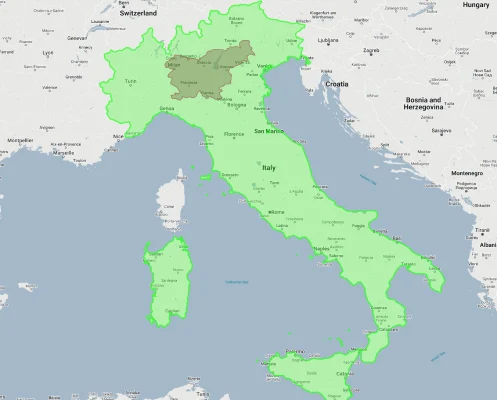
- Slovenia vs. Italy: Italy is approximately 14.9 times larger than Slovenia, meaning you could fit Slovenia into Italy nearly 15 times.
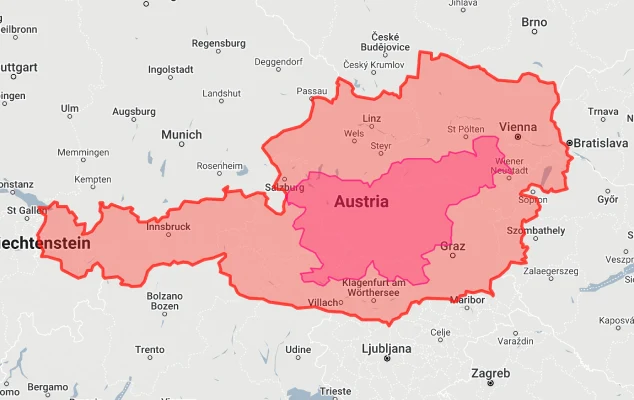
- Slovenia vs. Austria: Austria is about 4.1 times larger than Slovenia – you could fit Slovenia into Austria four times with some room to spare.
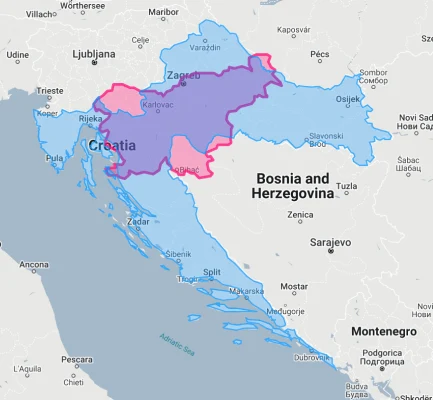
- Slovenia vs. Croatia: Neighboring Croatia is 2.8 times larger than Slovenia despite both being former Yugoslav republics.
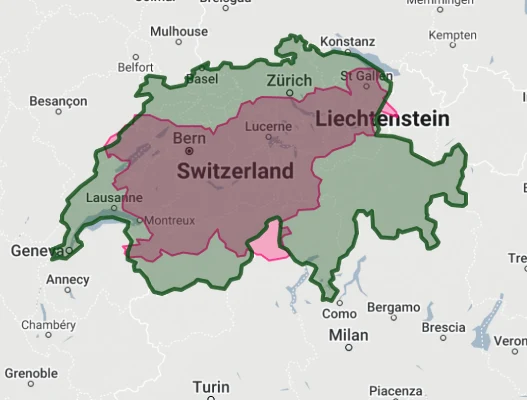
- Slovenia vs. Switzerland: Switzerland is about twice the size of Slovenia, despite both being similar Alpine countries.
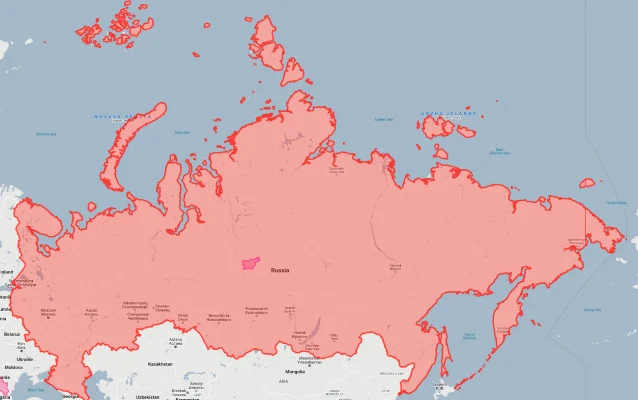
- Slovenia vs. Russia: Russia is approximately 840 times larger than Slovenia – the world’s largest country could fit Slovenia more than 840 times within its borders.
Slovenia’s Geographic Diversity: Four Worlds in One
Despite its small size, Slovenia contains remarkable geographic diversity, often described as “Europe in miniature”:
- Alpine Slovenia: The northwestern region features spectacular limestone peaks, glacial valleys, and mountain lakes, with the Julian Alps, Karavanke range, and Kamnik-Savinja Alps
- Mediterranean Slovenia: The southwestern coastal region along the Adriatic Sea offers a Mediterranean climate, olive groves, vineyards, and historic coastal towns
- Dinaric Slovenia: The southern karst region is characterized by limestone plateaus, underground rivers, spectacular caves, and disappearing lakes
- Pannonian Slovenia: The northeastern lowlands extend into the Pannonian Plain with rolling hills, thermal springs, and fertile agricultural areas
- Highest Peak: Mount Triglav reaches 2,864 meters (9,396 feet), is Slovenia’s highest point, and appears on the national coat of arms and flag
Adriatic Coastline: Small But Significant
Slovenia’s short coastline packs considerable geographic interest:
- Slovenia has just 46.6 kilometers (29 miles) of coastline along the Adriatic Sea, one of the shortest coastlines in Europe
- The coastal strip is wedged between Italy’s Gulf of Trieste and Croatia’s Istrian peninsula
- The Port of Koper is Slovenia’s main commercial port and one of the most important in the northern Adriatic
- The coastal towns of Piran, Izola, and Koper preserve their Venetian architectural heritage
- Despite its short length, the Slovenian coast is ecologically significant, with the Sečovlje Salina Nature Park and Strunjan Nature Reserve protecting coastal ecosystems
Karst Phenomena: Underground Wonderland
Slovenia’s karst region represents one of its most distinctive geographical features:
- The term “karst” itself derives from the Slovenian region Kras (Karst Plateau), which gave its name to this type of limestone terrain worldwide
- Slovenia has more than 10,000 documented caves, with Postojna Cave (24 km long) and Škocjan Caves (UNESCO World Heritage site) among the most impressive
- Intermittent Lake Cerknica is Europe’s largest, covering up to 38 km² when filled before completely disappearing underground
- The Reka River dramatically disappears underground in the Škocjan Caves, flowing 34 km beneath the surface before emerging in Italy
- Unique ecosystems have evolved in these underground environments, including the olm or “human fish” (Proteus anguinus), a pale, blind aquatic salamander
Population Distribution: Concentrated in Basins
Slovenia’s population pattern reflects its varied topography:
- With approximately 2.1 million people, Slovenia has an average population density of about 103 people per square kilometer
- Population is concentrated in urban basins and valleys, particularly along the Sava River valley where the capital Ljubljana is located
- Ljubljana, the capital, hosts about 295,000 residents in its urban area, roughly 14% of the country’s total population
- Alpine and karst regions have significantly lower population density, with some remote areas having fewer than 20 people per square kilometer
- Unlike many European countries, Slovenia has maintained relatively balanced regional development, with several medium-sized cities distributed across the country
Slovenia’s Administrative Divisions: Small But Diverse
Slovenia’s current administrative organization divides its small territory into statistical regions:
| Statistical Region | Area (km²) | Comparable Area |
|---|---|---|
| Jugovzhodna Slovenija | 2,675 | Luxembourg (2,586 km²) |
| Pomurska | 1,337 | Samoa (2,842 km²) |
| Osrednjeslovenska (Ljubljana Region) | 2,555 | Mauritius (2,040 km²) |
| Primorsko-notranjska | 1,456 | County of Surrey, UK (1,663 km²) |
| Municipality of Ljubljana | 275 | Malta (316 km²) |
Climate and Geography: Four Climate Zones
Slovenia’s varied topography creates distinct climate zones within short distances:
- The country has four major climate types within its small territory: Alpine, Mediterranean, Continental, and Pannonian
- The coastal region experiences Mediterranean climate with warm, sunny summers and mild winters
- Alpine areas have harsh mountain climate with cold winters, substantial snowfall, and cool summers
- The northeast has a continental climate with hot summers and cold winters
- Average annual precipitation varies dramatically, from 800mm in the northeast to over 3,500mm in the Julian Alps, making parts of Slovenia among the wettest in Europe
Strategic Position: Gateway Between Four European Regions
Slovenia’s compact size belies its historical strategic importance:
- Slovenia shares 1,086 kilometers (675 miles) of land borders with four countries: Italy, Austria, Hungary, and Croatia
- It sits at the meeting point of four major European geographic and cultural regions: the Alps, the Mediterranean, the Pannonian Plain, and the Balkans
- The “Ljubljana Gap” – a natural passage between the Alps and the Dinaric mountains – has been a crucial European transportation route since prehistoric times
- This strategic location has made the territory contested throughout history, ruled variously by the Celts, Romans, Franks, Habsburgs, and as part of Yugoslavia
- Today, major European transportation corridors pass through Slovenia, connecting Central Europe with the Adriatic and Balkan regions
Natural Resources: Forests and Waters
Slovenia’s landscape provides several valuable natural resources:
- Forests cover approximately 58% of Slovenia’s territory, making it the third most forested country in Europe after Finland and Sweden
- Water resources are abundant, with over 28,000 kilometers of watercourses and numerous springs
- Mineral resources include mercury (historically, the Idrija Mine was the world’s second-largest mercury mine), coal, lead, zinc, and building stone
- Agricultural land covers about 30% of the territory, with particularly fertile areas in the northeast
- The country has significant hydropower potential, which provides approximately 30% of its electricity
Environmental Protection: Small Country, Big Commitment
Slovenia’s approach to its compact natural environment is notable:
- Protected areas cover about 13% of Slovenia’s territory, including Triglav National Park and three regional parks
- The country is part of the European Green Belt, a network of habitats along the former Iron Curtain
- Slovenia has one of Europe’s highest proportions of Natura 2000 sites, covering 37% of its territory
- The Ljubljana Marshes, a unique wetland area near the capital, is protected as a UNESCO World Heritage site for its prehistoric pile dwellings
- Slovenia was the world’s first country to be declared a “Green Destination” under a comprehensive assessment of sustainable tourism criteria
Explore More Size Comparisons
Curious about how other major countries and continents compare in true size? Check out these related articles:
- The True Size of Croatia
- The Real Size of Italy
- The Real Size of Austria
- Complete List of Countries by True Size
Sources & Further Reading
- Statistical Office of the Republic of Slovenia. (2024). Territory and Climate Data.
- Surveying and Mapping Authority of Slovenia. (2023). Geographic Information.
- CIA World Factbook. (2024). Slovenia.