Albania
World Rank: #137
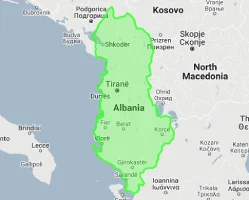
28,748 km²
Next Smaller Country
(Rank #138)
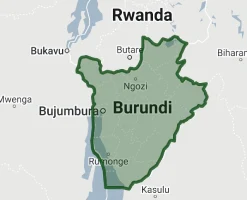
Burundi
27,834 km²
Albania: Balkan Jewel in Compact Form
Albania ranks as the 137th largest country in the world with a territory of 28,748 square kilometers (11,100 square miles). Nestled on the western side of the Balkan Peninsula, Albania is bordered by Montenegro, Kosovo, North Macedonia, Greece, and the Adriatic and Ionian Seas, occupying a strategic position between the Mediterranean region and Southeastern Europe.
What makes Albania geographically remarkable is its extraordinary diversity in such a modest area. This small nation packs impressive topographical variety into an area roughly the size of Maryland or the combined area of Vermont and New Hampshire.
Located between latitudes 39° and 43° North, Albania experiences minimal distortion on standard Mercator projection maps. The common perception of Albania’s size is generally accurate, with its position in southern Europe making it appear proportionally correct on most maps.
Let’s explore how Albania’s true size compares to other regions and what makes this compact Mediterranean gem geographically unique despite its modest dimensions. Here is our interactive country comparison tool that adjusts for Mercator projection distortion:
Watch Albania shrink to its actual size as we move it toward the equator. We compare it to the USA, Europe, Africa, Greenland, Brazil, Australia, Russia, India, China, etc. You can use this country size comparison interactive map here.
Albania’s True Size in Global Perspective
To better understand Albania’s dimensions, direct comparisons with other regions provide valuable context:
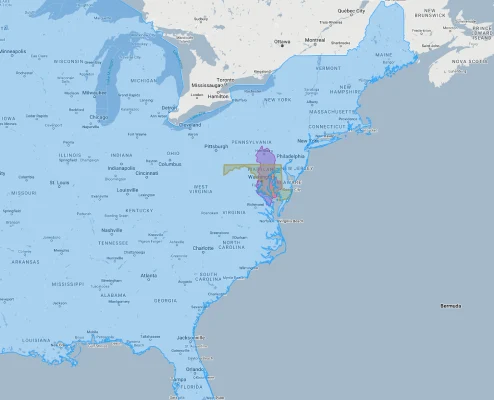
Albania vs. US States: Albania is similar in size to Massachusetts and about 1/14 the size of California
| Comparison | Flag | Area (km²) | Size Relative to Albania |
|---|---|---|---|
| Albania | |
28,748 | 1.0 |
| Italy |  |
301,340 | 10.48 times Albania’s size |
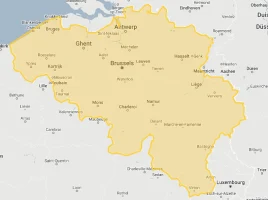
| Belgium |  |
30,528 | 1.06 times Albania’s size |
| Greece |  |
131,957 | 4.59 times Albania’s size |
| North Macedonia |  |
25,713 | 0.89 times Albania’s size |
| Massachusetts (US state) |  |
27,336 | 0.95 times Albania’s size |
| Slovenia |  |
20,273 | 0.71 times Albania’s size |
| Israel |  |
22,072 | 0.77 times Albania’s size |
| Sicily (Italian region) |  |
25,711 | 0.89 times Albania’s size |
| Equatorial Guinea |  |
28,051 | 0.98 times Albania’s size |
5 Surprising Albania Size Comparisons
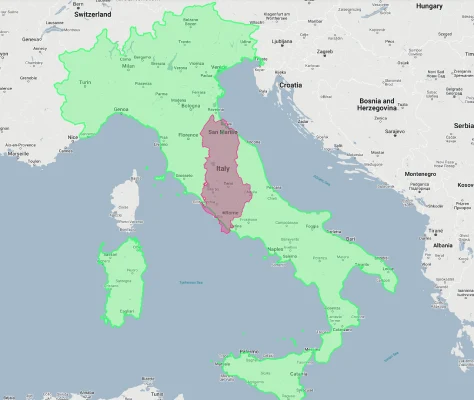
- Albania vs. Italy: Italy is approximately 10.5 times larger than Albania, meaning you could fit Albania into Italy more than ten times.
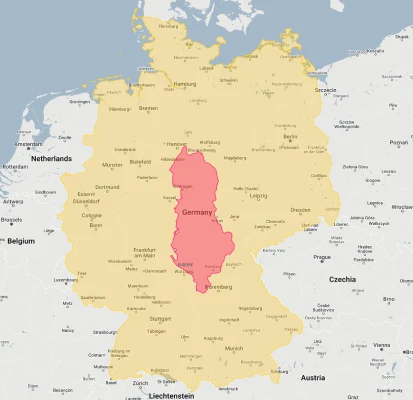
- Albania vs. Germany:
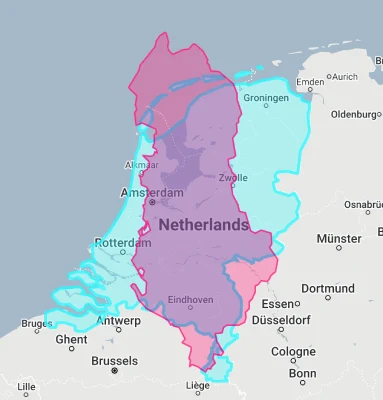
- Albania vs. Netherlands: The Netherlands is about 1.45 times larger than Albania, despite being similarly perceived as “small European countries.”
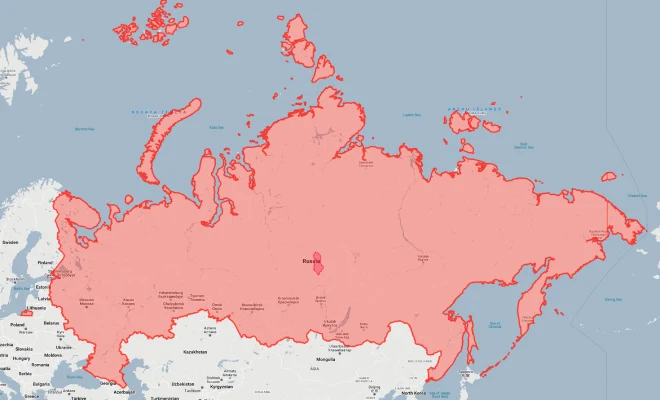
- Albania vs. Russia: Russia is approximately 590 times larger than Albania – the world’s largest country could fit Albania nearly 600 times within its borders.
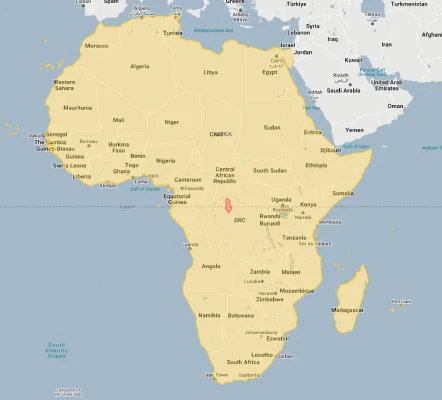
- Albania vs. Africa: The African continent is about 1,034 times larger than Albania.
Albania’s Geographic Diversity: Mountains, Coasts, and Valleys
Despite its small size, Albania contains remarkable geographic diversity:
- Albanian Alps: The rugged northern mountainous region, part of the Dinaric Alps, features spectacular peaks and valleys
- Coastal Lowlands: The western lowland along the Adriatic Sea comprises fertile plains and lagoons
- Central Mountain Range: The central highlands include the Korab Mountains, with Albania’s highest peak, Mount Korab, reaching 2,764 meters (9,068 feet)
- Albanian Riviera: The southern coastline along the Ionian Sea features dramatic limestone cliffs, secluded beaches, and crystal waters
- Lakes: Albania shares three major tectonic lakes with neighboring countries – Lake Shkodër (with Montenegro), Lake Ohrid and Lake Prespa (with North Macedonia and Greece)
Coastline: A Mediterranean Jewel
Albania’s coastline is one of its defining geographical features:
- Albania boasts 476 kilometers (296 miles) of coastline along the Adriatic and Ionian Seas
- The northern coastline along the Adriatic is characterized by sandy beaches, lagoons, and river deltas
- The southern Ionian coastline, known as the Albanian Riviera, features dramatic rocky shores, clear blue waters, and hidden coves
- The Karaburun Peninsula and Sazan Island form the Karaburun-Sazan Marine Park, Albania’s first marine protected area
- Despite having significant maritime resources, Albania historically under-utilized its coastline during its isolationist period (1944-1991)
Population Distribution: Rapid Urbanization
Albania’s population pattern reflects its recent socioeconomic transformation:
- With approximately 2.8 million people, Albania has an average population density of about 98 people per square kilometer
- Population distribution has shifted dramatically since the fall of communism, with significant migration from rural mountain areas to urban centers
- Tirana, the capital, has experienced explosive growth and now hosts nearly 1 million residents in its metropolitan area – about one-third of Albania’s entire population
- The coastal plain contains most of Albania’s major cities, including Durrës, Vlorë, and Shkodër
- Mountain regions have experienced depopulation, with some remote villages losing more than half their population since 1991
Albania’s Administrative Divisions: Relatively New Structure
Albania’s current administrative organization divides its small territory into larger units than historically present:
| Administrative Division | Area (km²) | Comparable Area |
|---|---|---|
| Dibër County | 2,586 | Luxembourg (2,586 km²) |
| Kukës County | 2,374 | Mauritius (2,040 km²) |
| Tirana County | 1,652 | Greater London (1,569 km²) |
| Vlorë County | 2,706 | Rhode Island, USA (2,706 km²) |
| Municipality of Tirana | 1,110 | Hong Kong (1,104 km²) |
Climate and Geography: Mediterranean With Mountain Influences
Albania’s varied terrain creates distinct climate zones within short distances:
- The coastal regions enjoy a classic Mediterranean climate with hot, dry summers and mild, rainy winters
- The interior highlands experience a continental climate with colder winters, significant snowfall, and cooler summers
- Despite its small size, temperature variations can be extreme – coastal areas may be 20°C (68°F) while mountain regions experience freezing conditions at the same time
- Albania receives abundant sunshine, averaging 2,400 hours of sunshine annually along the coast
- Precipitation patterns vary dramatically, from around 1,000mm annually on the coast to over 2,500mm in the northern mountains
Strategic Position: Crossroads of the Balkans
Albania’s compact size belies its historical strategic importance:
- Albania shares 691 kilometers (429 miles) of land borders with four countries: Montenegro, Kosovo, North Macedonia, and Greece
- Its position controlling the Strait of Otranto (the narrowest point of the Adriatic Sea, just 72 km wide) has given it strategic significance throughout history
- The ancient Via Egnatia, a crucial Roman road connecting Rome to Constantinople, passed through Albanian territory
- Albania’s location made it a contested territory between various empires, including the Byzantine, Bulgarian, Serbian, and Ottoman
- Today, Albania’s position gives it importance for European energy infrastructure, including the Trans Adriatic Pipeline
Natural Resources: Water as the Primary Asset
Albania’s landscape provides distinctive natural resources:
- Water resources are Albania’s greatest natural asset, with numerous rivers flowing from the mountains to the sea
- Hydropower generates over 90% of Albania’s electricity, one of the highest percentages in the world
- Mineral deposits include chromium (historically Albania was the world’s third-largest producer), copper, nickel, and bauxite
- Oil and natural gas reserves exist both onshore and offshore, though not fully developed
- Forests cover about 36% of Albania’s territory, providing timber and supporting biodiversity
Environmental Challenges: Balancing Development and Conservation
Albania’s compact size creates specific environmental considerations:
- Deforestation accelerated during the post-communist transition, with illegal logging affecting mountain regions
- Coastal development pressure has increased dramatically with tourism growth, threatening some pristine areas
- Water management challenges include hydropower development versus ecosystem preservation
- Industrial pollution from the communist era created several environmental hotspots requiring remediation
- Climate change impacts include increased flooding in coastal areas and more severe droughts affecting agriculture
Explore More Size Comparisons
Curious about how other major countries and continents compare in true size? Check out these related articles:
- The True Size of Belgium
- The Real Size of Italy
- The Real Size of USA
- Complete List of Countries by True Size
Sources & Further Reading
- CIA World Factbook. (2024). Albania.