Moldova
World Rank: #138
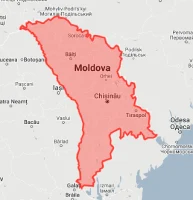
33,846 km² (13,068 sq mi)
Next Larger Country
(Rank #137)
Lesotho
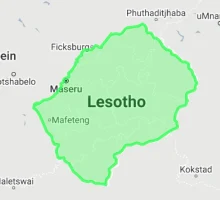
30,355 km² (11,720 sq mi)
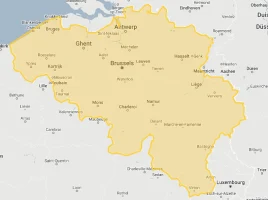
Moldova: Europe’s Smallest Post-Soviet State With Outsized Wine Production
Did you know Moldova, smaller than Maryland, has the world’s largest underground wine cellars? This compact landlocked nation packs extraordinary vineyards and wine production into just 33,846 square kilometers (13,068 square miles) – a territory so small it would fit into neighboring Ukraine 18 times!
Like many countries, Moldova appears distorted on standard Mercator projection maps, which increasingly exaggerate a country’s size the further it is from the equator. This common mapping technique can make Moldova’s already modest territory look deceptively larger in global context.
When viewed on typical world maps, Moldova might appear comparable to larger nations, but the reality is startling – this former Soviet republic would fit into Russia an astounding 505 times! Our interactive tool corrects this projection distortion by letting you drag Moldova across the map to see its true dimensions compared to other countries.
Watch Moldova’s true size revealed! See how this wine-producing nation compares when dragged across Russia, Ukraine, Turkey and beyond using our interactive mapping tool that corrects for Mercator distortion.
7 Surprising Moldova Size Facts
- Moldova is 505 times smaller than Russia, its former ruler – Russia’s Krasnoyarsk Krai region alone is 69 times larger than Moldova
- With just 33,846 km², Moldova is 18 times smaller than Ukraine, the country that completely surrounds it on its eastern, northern, and southern borders
- Moldova would fit into Turkey 23 times, yet produces more wine per capita than Turkey despite Turkey having 23 times more land
- Moldova is Europe’s smallest post-Soviet state – smaller than all 14 other former Soviet republics
- Despite its tiny size, Moldova contains the world’s largest wine cellar by area (Mileștii Mici) at 200 kilometers of underground tunnels – longer than the entire country’s length
- You can drive across Moldova’s entire width in just 2.5 hours (150 km/93 mi)
- Moldova has no coastline despite its name deriving from a river, and is one of Europe’s few double-landlocked countries (meaning its neighbors also have limited sea access)
Moldova Compared to Russia, Ukraine and Turkey
Moldova’s size becomes particularly striking when compared to Russia, Ukraine, and Turkey – three of the region’s major powers:
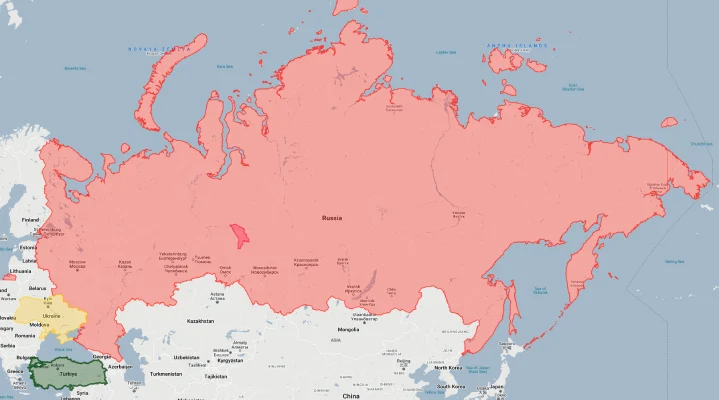
Moldova (highlighted in red) compared to Russia, Ukraine, and Turkey. Moldova would fit into Russia 505 times, Ukraine 18 times, and Turkey 23 times – revealing how tiny this wine-producing nation truly is compared to regional powers.
Moldova vs. Regional Powers
| Country Comparison | Flag | Area (km²) | Size Relative to Moldova |
|---|---|---|---|
| Moldova | |
33,846 | Our Moldovan baseline |
| Russia |  |
17,098,246 | 505 times larger than Moldova – Moldova would disappear as a tiny dot on a map of Russia |
| Ukraine |  |
603,550 | 18 times larger than Moldova, which it surrounds on three sides |
| Turkey |  |
783,562 | 23 times larger than Moldova despite being in the same general region |
| Romania |  |
238,397 | 7 times larger than Moldova despite sharing a common history and language |
| Krasnoyarsk Krai (Russian region) |
|
2,339,700 | 69 times larger than Moldova despite being just one of Russia’s 85 federal subjects |
| Odessa Oblast (Ukrainian region) |
|
33,310 | Similar size to Moldova despite being just one of Ukraine’s 24 oblasts |
Moldova vs. Global Size Twins
| Size Twin | Flag | Area (km²) | How It Compares |
|---|---|---|---|
| Moldova | |
33,846 | Our Moldovan baseline |
| Belgium |  |
30,528 | 10% smaller than Moldova but has 3 times the population |
| Lesotho | |
30,355 | 10% smaller than Moldova with similar population |
| Maryland (US state) |  |
32,131 | 5% smaller than Moldova yet with nearly twice the population |
| Taiwan |  |
36,193 | 7% larger than Moldova but with 8 times more people |
| Sicily (Italian island) |  |
25,711 | 24% smaller than Moldova but has a comparable population |
| Hainan (Chinese island province) |  |
33,920 | Almost identical to Moldova in size with 3 times the population |
Moldova vs. Russia: A Tiny Former Province of a Vast Empire
The size comparison between Moldova and Russia is truly staggering – Russia (17,098,246 km²) is 505 times larger than Moldova (33,846 km²). This makes Moldova appear as a barely visible speck when overlaid on a map of Russia.
To put this extreme contrast in perspective, Russia’s Krasnoyarsk Krai region alone (2,339,700 km²) is 69 times larger than Moldova, and even Russia’s smallest republic, Ingushetia (3,628 km²), is more than 10% the size of the entire country of Moldova.
Despite this enormous size disparity, Moldova has a population density 11 times higher than Russia (120 people/km² vs. 9 people/km²). This means that while Russia has vastly more territory, Moldova packs a significant population into a much smaller space.
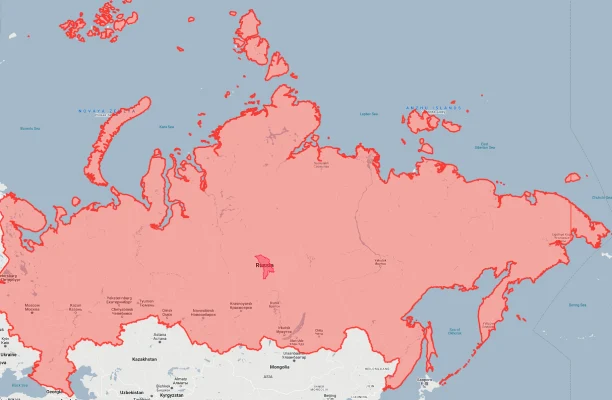
Moldova (highlighted in red) would fit into Russia 505 times! When placed on a map of Russia, Moldova is barely visible – smaller than many Russian cities.
Moldova vs. Ukraine: Surrounded by a Much Larger Neighbor
Moldova shares 1,222 kilometers of its total 1,885-kilometer border with Ukraine, which surrounds it on three sides. Ukraine (603,550 km²) is 18 times larger than Moldova (33,846 km²), creating a dramatic size difference between these closely connected neighbors.
What makes this comparison particularly striking is that even a single Ukrainian oblast (province) can rival Moldova’s entire territory. Ukraine’s Odessa Oblast (33,310 km²), which borders Moldova to the south, is nearly identical in size to the entire country of Moldova.
Despite this pronounced size difference, Moldova and Ukraine share deep historical connections, with both having been part of the Russian Empire and later the Soviet Union until their independence in 1991. The two countries maintain similar population densities (Moldova: 120 people/km², Ukraine: 73 people/km²) despite their vastly different total areas.
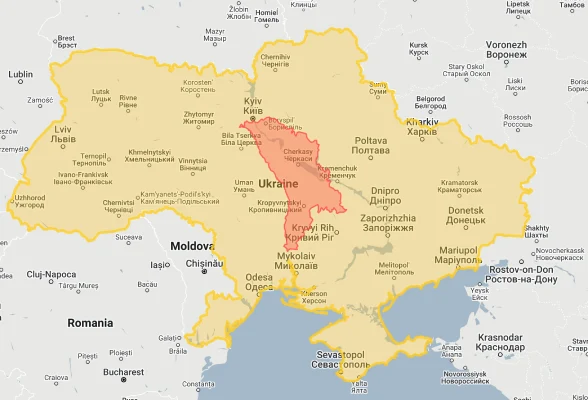
Moldova overlaid on Ukraine – it would cover just a small fraction of its larger neighbor, roughly equivalent to a single Ukrainian oblast.
Moldova vs. Turkey: The Diminutive Wine Producer and the Regional Giant
Turkey (783,562 km²) is 23 times larger than Moldova (33,846 km²), making Moldova appear tiny when compared to this regional power that straddles Europe and Asia. To put this in perspective, Turkey’s Konya Province alone (38,873 km²) is larger than the entire nation of Moldova.
Despite this enormous size difference, Moldova produces more wine in total than Turkey and has a wine industry that’s proportionally much larger relative to its size. Moldova devotes approximately 7% of its limited territory to vineyards, while Turkey dedicates less than 0.2% of its land to grape cultivation despite having 23 times more territory.
The size comparison becomes even more striking when considering population – Moldova’s 2.6 million citizens would represent just 3% of Turkey’s 84 million people. This creates a dramatic contrast in both territorial and demographic scale between these two countries in the same general region.

Moldova overlaid on Turkey – it would cover just a small southwestern portion of the country, less than a single Turkish province.
Moldova’s Unique Geographic Features
Despite its small size, Moldova has several distinctive geographical characteristics:
- The Rolling Wine Country: Moldova’s landscape is characterized by gently rolling hills with 75% of the country sitting at elevations between 100 and 300 meters (328-984 feet). This moderate, undulating terrain creates ideal conditions for vineyards, which cover approximately 112,000 hectares (277,000 acres) – roughly 3.3% of Moldova’s total territory. The country’s highest point, Bălănești Hill, rises to a modest 430 meters (1,410 feet), making Moldova one of Europe’s lowest-lying countries. This gentle topography has allowed Moldova to cultivate approximately 147 million grape vines across its limited territory – roughly 56 vines for every Moldovan citizen.
- The Underground Wine Kingdom: Beneath Moldova’s limited surface area lies one of the world’s most extensive underground spaces – the Mileștii Mici wine cellars extend for 200 kilometers (124 miles), earned a Guinness World Record as the world’s largest wine collection with over 2 million bottles. Remarkably, these underground tunnels are actually longer than the entire country’s maximum length (150 km/93 mi), creating the unusual situation where you could travel further underground within Moldova than you could drive across its surface. The Cricova wine cellars add another 120 kilometers (75 miles) of underground passages – meaning this small country contains over 320 kilometers (200 miles) of underground wine tunnels, roughly equivalent to the distance from London to Paris.
- The Split Country: Moldova’s already limited territory is further complicated by the breakaway region of Transnistria, a narrow strip of land along the eastern border with Ukraine. This self-declared republic, unrecognized by the United Nations, covers approximately 4,163 square kilometers (1,607 square miles) – about 12% of Moldova’s claimed territory. Transnistria creates an unusual situation where Moldova effectively controls only about 88% of its internationally recognized territory, making its functional size even smaller than its already modest official dimensions.
- The Landlocked Water Nation: Despite being landlocked, Moldova has a surprisingly strong connection to water, with over 3,000 rivers and streams – though most are quite small. The country’s main rivers, the Dniester and Prut, form natural borders with Ukraine and Romania respectively. Moldova contains over 60 natural lakes and 3,000+ artificial reservoirs, creating a situation where approximately 2.8% of this small, landlocked country is actually covered by water. The Dniester River runs for 398 kilometers (247 miles) through Moldovan territory – more than twice the country’s maximum width – creating a meandering blue lifeline that shapes the nation’s limited geography.
Moldova’s Administrative Divisions
Despite its small size, Moldova is divided into 32 districts (raioane), 3 municipalities, and 2 autonomous regions:
| Administrative Region | Area (km²) | Similar Size To | Geographic Character |
|---|---|---|---|
| Găgăuzia (autonomous region) |
1,832 | New York City | Southern autonomous region with Turkic cultural heritage and semi-arid steppe climate |
| Transnistria (breakaway region) |
4,163 | Rhode Island | Narrow strip along the eastern border with heavy industry and Soviet-era architecture |
| Cahul District (largest district) |
1,545 | Greater London | Southwestern district with Romania border and agricultural focus |
| Chișinău Municipality (capital region) |
635 | Singapore | Central capital region with one-third of country’s population |
| Dubăsari District (smallest district) |
309 | Malta | Eastern district partially controlled by the Transnistrian authorities |
5 Notable Geographic Features in Moldova’s Small Territory
1. Codru Forest Reserve
In central Moldova lies the Codru Forest Reserve, a 5,177-hectare protected area containing some of Europe’s oldest oak forests, with trees exceeding 500 years in age.
This dense forest, whose name literally means “forest” in Romanian, represents the largest remaining tract of the once-vast Central European forest system within Moldova’s borders. Despite the country’s small size, Codru provides habitat for over 1,000 plant species, 145 bird species, and 43 mammal species – a concentrated biodiversity hotspot.
2. Old Orhei (Orheiul Vechi)
Carved by the Răut River, Old Orhei is a dramatic limestone gorge where monks hollowed out an entire monastery inside the cliff face, creating one of Eastern Europe’s most unique religious sites.
This spectacular natural and historical complex dates back more than 2,000 years, with archaeological evidence of continuous human settlement since the Paleolithic era. The site contains cave dwellings, fortifications, and baths spanning Dacian, Mongol, Tatar, and medieval Moldovan periods – an extraordinary concentration of history in a small gorge within an already small country.
3. Prutul de Jos Wetlands
Along Moldova’s southwestern border with Romania lies the Prutul de Jos (Lower Prut) wetland complex, a Ramsar-protected site covering 19,152 hectares where the Prut River creates an ecological wonderland.
This site features marshes, natural lakes, and flooded meadows that host 203 bird species, including Europe’s largest colony of red-breasted geese. The wetlands provide spawning grounds for 41 fish species despite being located in one of Europe’s smallest countries. This single site constitutes nearly 5.7% of Moldova’s entire territory.
4. Țipova Monastery Cliffs
Near the Dniester River stands one of Moldova’s most dramatic landscapes – limestone cliffs rising 200 meters (656 feet) above the water with caves containing one of the oldest rock monasteries in Eastern Europe.
These impressive cliffs contain a complex of caves on multiple levels carved by monks between the 10th and 19th centuries. Below the cliffs, a 16-meter (52-foot) waterfall creates one of Moldova’s most scenic locations where geological forces have created dramatic vertical relief in an otherwise gently rolling country.
5. Pădurea Domnească (Royal Forest)
Northern Moldova contains the Pădurea Domnească (Royal Forest) Nature Reserve, a 6,032-hectare protected area that preserves the country’s largest remaining floodplain forest along the Prut River.
This unique ecosystem contains Moldova’s oldest oak trees, including “Dimitrie Cantemir’s Oak” estimated at 450 years old with a trunk circumference of 8 meters (26 feet). The reserve hosts Europe’s only remaining natural colony of white herons and Moldova’s only wild European bison population, reintroduced in 2005 to recreate the ecosystem that once covered much of the region.
Explore More Size Comparisons
Curious about how other countries compare in true size? Check out these related articles:
- Real Size Of Ukraine: Europe’s Second-Largest Country That’s Larger Than France Yet Smaller Than Texas
- Real Size Of Romania: Carpathian Nation With Europe’s Largest Virgin Forest Yet Smaller Than Oregon
- Real Size Of Turkey: Transcontinental Nation Smaller Than Alaska Yet Spanning Two Continents
- Real Size Of Russia: The Giant That Would Stretch From San Francisco to London if Moved South
- Complete List of Countries by True Size